
The startup playbook has been completely rewritten in 2026.
Gone are the days when a founder’s first move was to raise a seed round just to hire a five-person in-house engineering team.
According to a recent report by Popdust, project-based hiring is now the global standard for startups and SMEs.
The shift is driven by the need for extreme specialisation in emerging technologies like AI and highly optimised e-commerce platforms.
In a market that moves at the speed of light, "permanence" is often a lead weight that sinks early-stage companies.
Today’s most successful founders are using a flexible "Freelance-First" model to move from MVP to market in record time.
The MVP Sprint: Choosing Speed Over Permanence
The Minimum Viable Product (MVP) is no longer a six-month project. In 2026, if you aren't testing your market fit within weeks, your competitors likely already have.
Freelance developers allow startups to engage in "Rapid Prototyping," building functional versions of an idea in days rather than months.
Eliminating the Burn Rate
Hiring in-house comes with a "hidden tax" of benefits, office space, and management overhead.
By utilising freelance talent, founders can keep their burn rate low and allocate more capital toward user acquisition and SEO.
From No-Code to Custom Infrastructure
Many founders start with no-code tools for initial validation, but they quickly hit a ceiling. When the business needs to scale, they hire professional freelance developers to build the robust, custom-coded infrastructure required for high-volume traffic.
Accessing Specialised "Niche" Talent
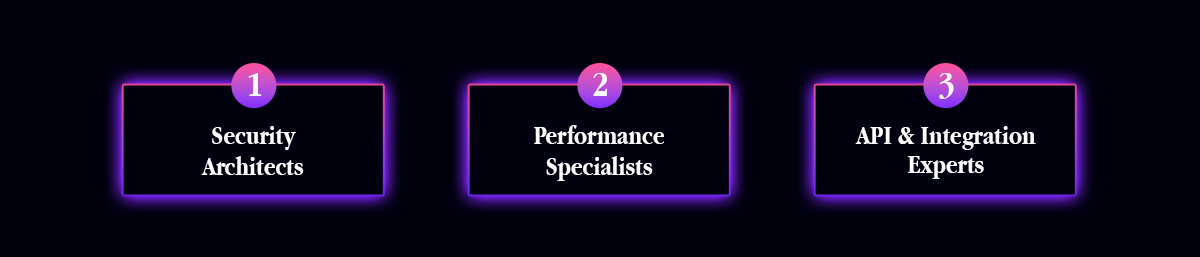
The "Generalist" developer is becoming a relic of the past. In 2026, the technical demands of a startup are too complex for one "Full-Stack" person to master. Founders are now hiring specific experts for limited, high-impact engagements.
- Security Architects: To implement advanced protocols like Passkeys and hardware-key authentication.
- Performance Specialists: To ensure the site hits 100/100 on Core Web Vitals, avoiding the code bloat that kills early rankings.
- API & Integration Experts: To handle complex third-party syncs that allow the startup to function within a larger ecosystem.
The Global Talent Advantage
Founders are no longer limited by their local geography. They can hire top-tier developers from vetted platforms, whether those experts are based in Mumbai, Manchester, or Charlotte.
The Hybrid Team Model: Strategy Meets Execution
The most successful startups in 2026 aren't just "outsourcing", they are building hybrid teams. This often involves hiring a Fractional CTO to lead the high-level strategy and technical roadmap. The actual coding tasks are then distributed to a fleet of experienced freelancers who can execute without the need for constant "hand-holding."
| Feature In-House Team Hybrid | id Freelance Model | |
|---|---|---|
| Fixed Cost | Very High (Salaries + Benefits) | Low (Pay for what you use) |
| Scalability | Slow (Recruiting takes months) | Instant (Burst capacity on demand) |
| Expertise | Limited to the team's skills | Access to a global niche talent pool |
| Agility | Moderate (Internal politics) | High (Results-oriented execution) |
Scaling on Demand
This model allows a startup to "burst" its development capacity during a major feature launch or a holiday rush. Once the launch is successful, they can scale back to a smaller maintenance crew, preserving their cash flow for the next growth phase.
Long-Term Ownership and IP Security

A major risk of using "all-in-one" website builders is that you are essentially renting your business infrastructure. By hiring a specialised web developer to build a custom solution, the startup ensures it owns 100% of the source code and Intellectual Property (IP).
Technical SEO and Performance
Custom-built sites are leaner and faster than generic templates. In 2026, search engines like Google and AI discovery engines prioritise sites with clean code and instant load times. Professional freelancers ensure your Technical SEO is baked into the foundation, giving you an immediate edge over bloated competitors.
Protecting Against 2026 Threats
With AI-driven "Zero-Day" discovery and logic bombs becoming common, startups need elite security. Freelance security experts can implement immutable backups and behavioural firewalls that protect your data from modern threats.
Making Money from Your MVP: The Path to Revenue
The goal of an MVP isn't just to exist; it is to prove that people will pay for your solution. Founders who succeed are the ones who integrate "Monetisation Hooks" early in the development process using professional business strategies.
- Tiered Pricing: Building an API-driven billing system that allows users to upgrade their features instantly.
- Data as a Service: Using original research and internal metrics to provide premium reports to your users.
- Pre-MVP Marketing: Building a waitlist and offering "Founding Member" discounts to secure revenue before the full launch.
Frequently Asked Questions
Q: What pre-MVP marketing strategies actually consistently work?
A: Building a "Personal Monopoly" on social media is the most effective strategy in 2026. By sharing your "build-in-public" journey on Twitter or LinkedIn, you create an audience that is ready to buy the moment you launch.
Q: How do I make money from my minimum viable product (MVP)?
A: Focus on solving one "High-Pain" problem exceptionally well. If the solution saves a business time or money, you can charge for it immediately via a subscription or a per-use fee.
Q: Is it safe to share my code with freelance developers?
A: Yes, provided you use professional contracts and vetted platforms. Always ensure your freelancer signs an NDA and that you utilise a platform like Legiit, where you can check their history of trust and reliability.
Q: How do I manage a team of freelancers effectively?
A: Utilise a project management tool and have a clear "Technical Roadmap." Many startups also use a Fractional CTO from Legiit to oversee the quality of the code and the timeline.
Q: Why shouldn't I just hire a full-time developer?
A: For an early-stage startup, a full-time hire is a "fixed cost" that can become a liability if your product direction changes. Freelancers give you the flexibility to pivot your technology stack as you learn from your customers.
The Strategic Bottom Line
In 2026, the distance between an idea and a market-ready product has never been shorter. Startups are winning because they have stopped trying to build "everything" in-house.
By leveraging the global pool of Freelance Developers, founders can access elite talent, maintain ownership of their IP, and scale their tech on demand. The hybrid model of a Fractional CTO combined with specialised freelancers is the ultimate "Cheat Code" for modern growth.
Stop recruiting and start building.







 Download