



The digital landscape of 2026 has fundamentally changed how websites are discovered.
For nearly two decades, we optimised for a single "searcher" at a desk looking at a list of ten blue links.
Today, we are optimising for a new breed of visitor: the AI Crawler. Bots like OAI-SearchBot and PerplexityBot now act as the primary "gatekeepers" between your business and your customers.
These AI assistants don't just "index" your site; they "ingest" it to synthesise answers for users in real-time.
If your technical foundation is shaky, these bots will skip your content entirely, leaving your brand invisible in the age of AI Overviews.
This guide breaks down the essential 2026 Technical SEO layers you need to master to remain "machine-readable" and "source-worthy."
The "Ingestion" Layer: Crawlability & Indexing in 2026
AI bots operate on a much tighter crawl budget than the traditional Googlebot of the past.
They prioritise "freshness" and "directness," meaning they want the most relevant data with the least amount of digital friction.
Robots.txt for the AI Era
In 2026, your robots.txt file is more than just a set of instructions; it is an invitation.
Ensure you aren't accidentally blocking the specific bots that power ChatGPT, Perplexity, or Gemini search.
These bots require explicit permission to cite your brand and pull your data into their "Knowledge Graphs."
The 3-Click Architecture Rule
If a page is deeper than three clicks from your homepage, modern AI search bots often stop crawling it.
A flat site architecture is no longer just "best practice"—it is a technical requirement for being cited.
The Death of Client-Side Rendering
AI bots generally do not "click" buttons or wait for complex JavaScript to execute.
If your core content is hidden in "read more" tabs or accordions that require user interaction, it is invisible to the AI.
To win in 2026, use Server-Side Rendering (SSR) to ensure all content is visible on the very first load.
The "Performance" Layer: Interaction to Next Paint (INP)
In 2026, Interaction to Next Paint (INP) has fully replaced First Input Delay as the gold standard for responsiveness.
Google’s AI-driven algorithm now treats "User Delight" as a primary ranking signal, and INP is the metric that measures it.
The 200ms Target
Your site must visually respond to a user's click or tap in under 200 milliseconds to be considered "Good."
If a user clicks a button and nothing happens for half a second, the AI interprets this as a "low-quality" signal.
TTFB & File Size Constraints
AI "User Bots", the ones that generate the actual answers, favour lean, fast pages.
Target a Time to First Byte (TTFB) of under 600ms and keep your total HTML size under 1MB. Heavy, unoptimized sites are being de-indexed in favour of high-performance "Knowledge Assets."
Managing JavaScript Bloat
Break up long-running tasks that block the main thread of the browser.
If a third-party chat widget or a heavy tracking script slows down the page's response time, your INP score will tank.
Hiring a specialised freelance developer from the programming & technology category to "clean" your code is often the highest-ROI technical move you can make this year.
The "Semantic" Layer: Machine-Readable Meaning
To be cited in an AI Overview, your site must be easy for a Large Language Model (LLM) to "extract" without hallucinating.
This requires a shift from writing for humans only to writing for Human-Machine Harmony.
The 100-Word Definition Block
Include clear, declarative statements in the first 100 words of every section.
For example: "A Manchester moving company provides residential and commercial relocation services across the UK."
This allows the AI to "grab" the snippet easily for its summary without having to "guess" your meaning.
Advanced Schema & Entity Trust
Use Organisation, Author, and FAQ schema to build your brand's "Entity Trust." In 2026, Author Schema is the technical bridge to your E-E-A-T (Experience, Expertise, Authoritativeness, and Trust).
It tells the AI exactly who wrote the content and why they are qualified to be a cited source.
HTML Tables: The Citation Magnet
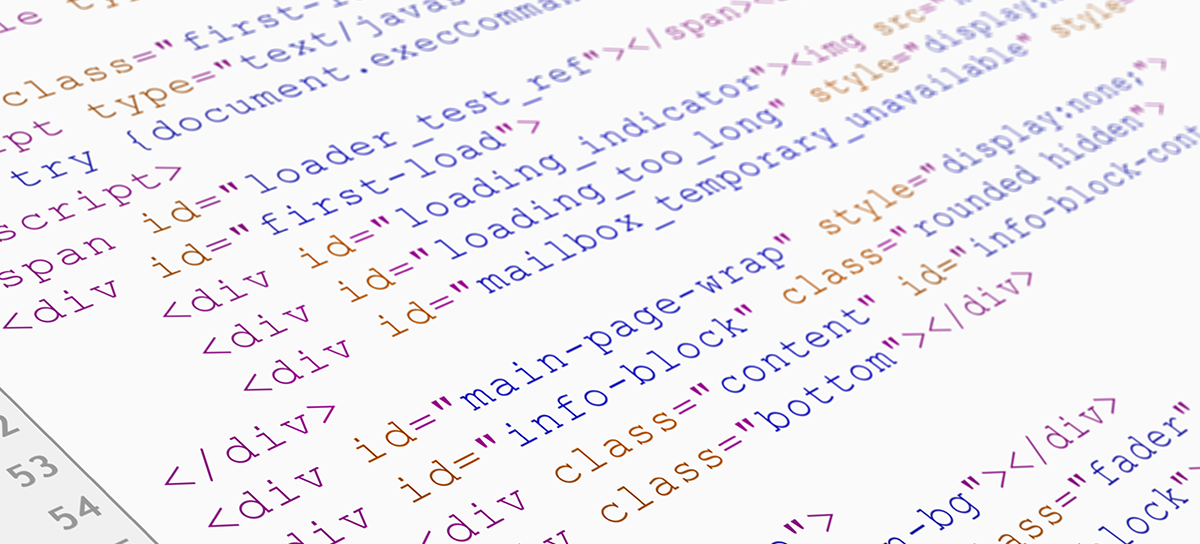
AI crawlers process structured HTML tables much faster than long paragraphs of prose.
Use lightweight tables for pricing, service comparisons, or data sets.
Structured data in a table format is a "citation magnet" that AI assistants love to pull directly into their answers.
Technical SEO Checklist for 2026
| Priority | Technical Task | Goal / Target |
|---|---|---|
| Critical | INP (Interaction to Next Paint) | ≤ 200ms |
| Critical | SSR / HTML Accessibility | All content visible on first load |
| High | AI Crawler Permissions | Allow OAI-SearchBot & PerplexityBot |
| High | Schema Markup | FAQ, Author, & Organisation JSON-LD |
| Medium | TTFB (Time to First Byte) | ≤ 600ms |
| Medium | Crawl Depth | All key pages ≤ 3 clicks from home |
Action Plan for Your Agency

If you are managing clients and want to stay ahead of the "AI Wave," follow this 3-step technical audit.
Audit the "Franken-stack": Have your developers remove or defer any non-essential JavaScript slowing down your INP.
Update Content Briefs: Instruct your writers to include a 2-sentence summary at the top of every post to serve as an "AI extract."
Monitor the "Legiit Score": Use your Business Dashboard to track your technical health daily and identify "cheap wins." Deploying advanced fixes from the technical SEO subcategory can instantly resolve critical performance bottlenecks.
Frequently Asked Questions
Q: How do I detect AI crawlers on my site?
A: You can check your server logs for User-Agent strings like "OAI-SearchBot" or "PerplexityBot." Most modern SEO tools also now include an "AI Crawler Visibility" report.
Q: What is the 30% rule for AI?
A: In technical SEO, the 30% rule suggests that AI-generated content should never make up more than 30% of a page's "Primary Content" to maintain original Information Gain.
Q: Why do 85% of AI projects fail?
A: Most fail due to "Dirty Data"; if the technical foundation of the information is disorganised, the AI cannot process it accurately or provide a useful output.
Q: Which 3 jobs will survive AI?
A: Strategic thinkers (Architects), skilled trades (Human-in-the-Loop), and creative problem solvers who can pilot AI tools effectively will remain in high demand.
Q: Does a fast site help with AI Citations?
A: Absolutely. AI search engines prioritise speed and "Machine Readability" because it allows them to synthesise answers faster for the end user.
The Strategic Bottom Line
In 2026, technical SEO is no longer about "tricking" an algorithm; it is about providing the cleanest, fastest data to the world's most powerful AI engines.
If your site is fast (low INP), easy to crawl (SSR), and semantically clear (Schema), you become the "Source of Truth" that AI assistants crave.
Stop thinking of your site as a collection of pages and start thinking of it as a high-performance Knowledge Asset.
By utilising the vetted experts available on the primary SEO marketplace, you can ensure your site is built flawlessly for the AI future today.







 Download