
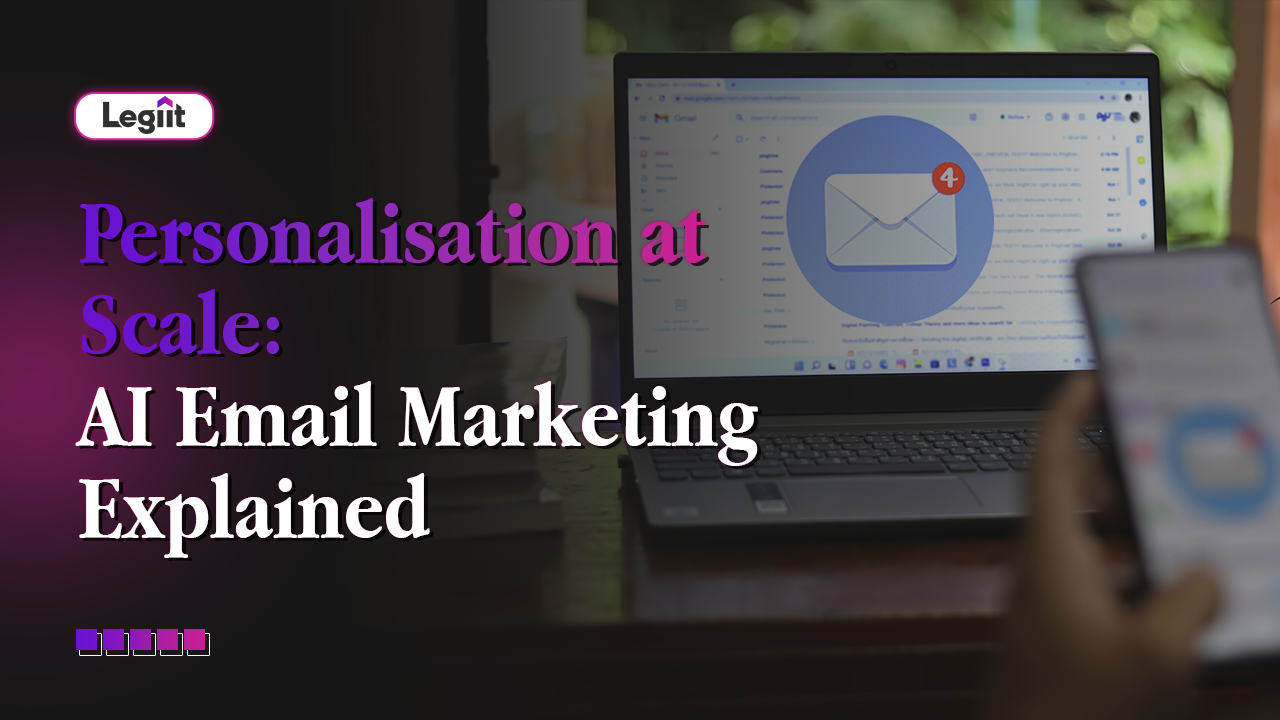
We all know the feeling. You open an email that starts with "Hi [First Name]," and you immediately roll your eyes.
For years, marketers thought that inserting a name into a subject line was the height of personalisation. It is not. It is a database trick from the late nineties. It doesn't make the recipient feel special; it just shows you have their data in a spreadsheet.
Real personalisation is about relevance. It is about sending an email that feels as if it were written specifically for the person reading it, based on what they actually care about right now.
The problem is scale. You can easily write a deeply personal email to one client. You can maybe do it for ten. But you cannot do it for ten thousand subscribers. You physically cannot analyse the browsing history, purchase habits, and time zone of every single person on your list every single day.
This is where Artificial Intelligence steps in. AI solves the "scale" problem. It allows you to treat a list of one million people not as a crowd, but as one million individuals.
This guide explains how AI moves beyond basic segmentation to create a "segment of one," transforming your email marketing from a broadcast into a conversation.
The Shift from Static to Dynamic Content
Traditional email marketing is static. You build one email template, you write one message, and you send it to everyone. Maybe you swap out the name, but the core content is identical.
AI Email Marketing is dynamic. It uses "Content Blocks" to assemble emails on the fly.
Imagine your email is built out of Lego bricks. One brick is the header, one is the product recommendation, one is the article link, and one is the coupon code.
When you hit send, the AI builds a unique version of that email for every single subscriber.
- Subscriber A (a budget-conscious student) sees a discount code and a "Best Value" product.
- Subscriber B (a high-spending executive) sees a "New Arrivals" showcase and a link to a premium whitepaper.
They both opened the "same" campaign, but they saw completely different emails. This is Personalisation at Scale. It ensures that no two inboxes look exactly alike.
The Mechanics of "Next Best Action"
How does the AI know what to show? It uses a concept called the "Next Best Action" model.
Humans are predictable creatures. If you buy a coffee machine today, we can predict with high accuracy that you will need filters in three weeks. If you read three blog posts about "SEO Tips," you are likely interested in an SEO course.
AI models track these behaviours in real time. They do not just look at what you bought; they look at what you almost bought.
Did you hover over the "Pricing" page for twenty seconds but leave? The AI flags that as high intent. The next email you get will automatically include a section addressing pricing objections or offering a limited-time demo. This isn't magic; it is math. The AI calculates the probability of what you want next and serves it to you before you even ask.
Open Time Personalisation
This is a unique capability that most marketers overlook. Standard emails are "frozen" the moment you hit send. If you send an email on Monday offering a product, and that product sells out on Tuesday, anyone opening the email on Wednesday sees a broken offer.
AI enables Open Time Personalisation.
These are dynamic images and text blocks that load only when the email is actually opened. The content updates in real time.
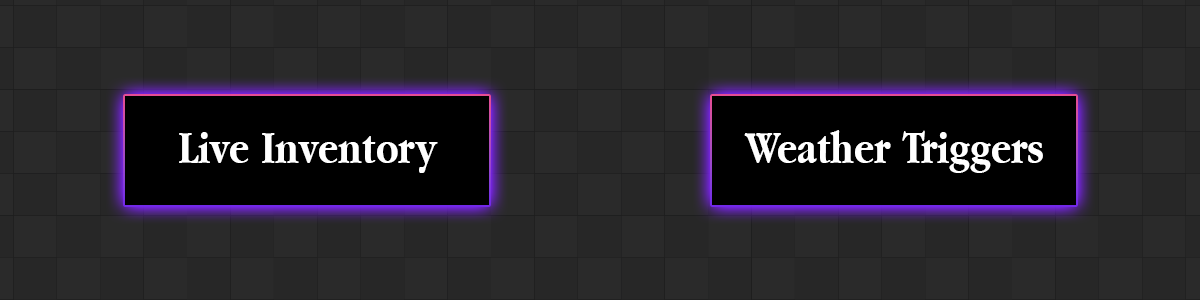
- Live Inventory: The email checks your stock levels the second the user clicks open. If the red shirt is out of stock, it automatically swaps the image to the blue shirt.
- Weather Triggers: The AI detects the user's location. If it is raining in London when the user opens the email, the banner image shows raincoats. If it is sunny in Miami, the same email shows sunglasses.
This creates a sense of immediacy and relevance that static emails can never match.
Sentiment Matching and Tone Adjustment
Personalisation is not just about what you say; it is about how you say it.
Different customers respond to different tones. Some people respond to urgency and short, punchy sentences ("Buy now! Last chance!"). Others respond to detailed, storytelling copy ("Here is the story behind our new fabric...").
Advanced AI tools can tag your subscribers based on their "Psychographic Profile." If Subscriber A always clicks on detailed, long-form emails, the AI will serve them the "Storyteller" version of your newsletter. If Subscriber B only clicks on short, image-heavy emails, they get the "Visual" version.
You write the core message once, and the AI adjusts the delivery style to match the personality of the reader.
Why You Need a Technical Architect
Reading about this is exciting, but implementing it is technical.
To make this work, your email platform needs to talk to your website, your inventory system, and your CRM. You need to set up "API calls" and "dynamic tags." If you try to do this manually without technical knowledge, you risk sending broken code to your entire list.
This is why smart businesses don't just buy the software; they hire a technical architect.
This brings us back to our pillar resource: The Top 7 Freelancers to Automate Your Email Marketing with AI. These experts understand the complex plumbing required to connect these data sources. They can build the dynamic templates and set up the logic rules that allow you to sit back and watch the system work.
FAQ: AI Personalisation
Q: What is the difference between segmentation and personalisation?
A: Segmentation is grouping people by broad categories (e.g., "Women over 30"). Personalisation is targeting the individual (e.g., "Sarah, who looked at red shoes yesterday"). AI allows you to move from broad segments to individual personalisation.
Q: Does AI personalisation require a lot of data?
A: To get started, no. Even basic data like "past purchase history" or "email clicks" is enough to start predicting preferences. However, the more data points you feed the system (like website browsing behaviour), the more accurate the predictions become.
Q: Is this expensive to set up?
A: The software costs have dropped significantly. Features that used to cost thousands a month are now available in tools like Klaviyo or ActiveCampaign. The main cost is the setup time and expertise, which is why hiring a freelancer is often the most cost-effective route.
Q: Will customers find it creepy?
A: Only if you use it poorly. The goal is to be helpful, not invasive. "We noticed you liked this item" is helpful. "We saw you were online at 2 AM" is creepy. Good AI marketing focuses on product relevance, not surveillance.
Q: Can AI personalise the subject line too?
A: Yes. AI can generate unique subject lines for different segments. It can even insert the name of the specific product the user was looking at, boosting the chance that they notice the email in a crowded inbox.
Final Verdict
The era of the "email blast" is over. Sending the same message to everyone is a fast way to get unsubscribed.
Personalisation at scale is the only way to cut through the noise. It respects your customers' time by showing them only what is relevant to them. It turns your marketing channel into a helpful service.
But this requires a shift in infrastructure. You cannot run a dynamic, AI-driven strategy using a basic, static newsletter tool. You need the right setup.
If you are ready to stop guessing and start connecting, do not try to wire up the complex logic alone. Head to Legiit, browse the experts in Email Automation, and find a freelancer who can build a personalisation engine that works for you while you sleep.





 Download