


E-commerce SEO means wrangling hundreds of product and category pages, duplicate content, and site speed, so the right tools matter. The catch is that lists like this often mix in analytics, hosting, and branding services that are not SEO tools.
This review sorts five named options by whether they actually do e-commerce SEO, using company materials, third-party reviews, and pricing, and flags anything that can't be independently verified.
Executive Comparison
| Provider | Best For | Pricing | Primary Limitation |
|---|---|---|---|
| Legiit Command Centre | Tools plus cheap SEO help | Free trial, then paid | General, not ecommerce-specialist |
| Legiit | Outsourcing SEO at scale | Per gig, varies by seller | A marketplace, not a tool |
| WP Engine | Fast hosting for SEO speed | WooCommerce from ~$24/month | Hosting, not an SEO tool |
| FullStory | Shopper behaviour and conversion | Quote-based, premium | Conversion analytics, not SEO |
| Pezona | Brand clarity and messaging | Monthly subscription | Not SEO at all |
#1. Legiit Command Center

Command Center is Legiit's SEO tools and business dashboard, with rank tracking, audits, and reporting, plus a marketplace to hire e-commerce SEO help. For a store, it pairs affordable tools with people who can do the work.
Verdict: Its strength is covering core e-commerce SEO tasks cheaply, then letting you buy product-page or technical work you cannot do yourself.
Reality Check: It is a general SEO toolset, not an e-commerce-specialist platform, and exact features and pricing sit behind a trial and upgrade, so check the current plan before committing.
| Core Service | SEO tools dashboard plus marketplace |
| Pricing Tier | Free trial, then paid |
| Typical Turnaround | Ongoing |
| Ideal User | Stores wanting tools plus cheap SEO help |
The advantage for a store is handling the scale problem: track and audit with the tools, then outsource repetitive product-page work through the marketplace. The trade-off is depth, since dedicated e-commerce SEO software crawls and analyses large catalogues more thoroughly, and you will want to confirm current features and pricing yourself.
Legiit is associated with founder Chris M. Walker and carries a broadly credible reputation across its marketplace and tools. It rewards stores that combine the tools with on-demand help.
Pro Tip: Use the tools to track and audit, and the marketplace for product-page optimisation at scale.
#2. Legiit
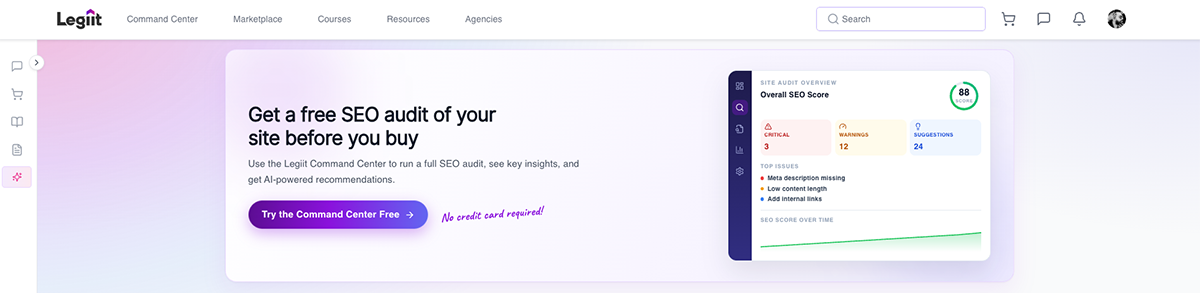
Legiit itself is the marketplace, where you hire e-commerce SEO services directly, product descriptions, category-page optimisation, technical fixes, and links, from rated sellers.
Verdict: Its strength is affordable, on-demand e-commerce SEO work, useful for the repetitive scale a store demands.
Reality Check: It is a services marketplace, not an SEO tool, and quality varies from one seller to the next, so vet the freelancer first.
| Core Service | Freelance SEO marketplace |
| Pricing Tier | Entry to mid |
| Typical Turnaround | Per seller, days |
| Ideal User | Stores outsourcing SEO tasks at scale |
The value for a store is muscle: a big catalogue needs a lot of repetitive optimisation, and a marketplace lets you buy that affordably. The catch is that you are buying results rather than running software, so reviews and clear briefs matter.
It fits stores that want the work done for them. It is not a tool, so judge it on that basis.
Pro Tip: Bundle product-page optimisation as a recurring order so a large catalogue gets covered steadily.
#3. WP Engine
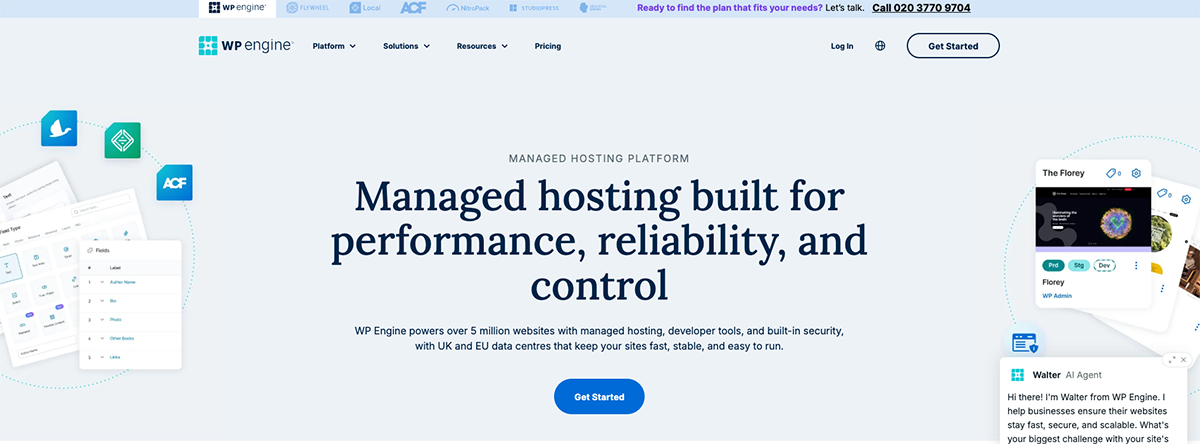
WP Engine is not an SEO tool, but it matters for e-commerce SEO. It is managed WordPress and WooCommerce hosting built for speed, which directly affects Core Web Vitals and rankings.
Verdict: Its strength is fast, reliable hosting with caching and a CDN, improving the page-speed signals that influence both SEO and conversions.
Reality Check: It is hosting, not an SEO tool, so it does no keyword research, audits, or tracking, and it only suits WordPress or WooCommerce stores.
| Core Service | Managed WordPress and WooCommerce hosting |
| Pricing Tier | WooCommerce from ~$24/month |
| Typical Turnaround | Ongoing |
| Ideal User | WooCommerce stores wanting fast, managed hosting |
Founded in 2010 and powering millions of sites, WP Engine genuinely helps the technical-speed side of SEO, which is a real ranking and revenue factor for stores. It is premium-priced and WordPress-only, though, and it solves performance rather than optimisation.
It fits WooCommerce stores wanting a fast, managed foundation. It is not where the SEO work itself happens.
Pro Tip: Treat WP Engine as the fast foundation, and pair it with a real SEO tool for the optimisation itself.
#4. FullStory

FullStory is not an SEO tool. It is a digital experience analytics platform that records sessions and heatmaps to show how shoppers behave on your store, which helps conversion, not rankings.
Verdict: Its strength is behaviour insight, revealing where shoppers hesitate or drop off so you can fix the funnel.
Reality Check: It improves conversion, not search rankings, so it does not flag the technical or on-page SEO issues an e-commerce site needs.
| Core Service | Digital experience analytics platform |
| Pricing Tier | Quote-based, premium |
| Typical Turnaround | Ongoing |
| Ideal User | Stores improving conversion, not SEO health |
Founded in 2014 and widely used, FullStory is powerful for understanding why shoppers abandon carts. That is a valuable, but different, job than getting found in search, and reviewers note a steep learning curve and high cost.
It fits stores focused on conversion once shoppers arrive. It does not answer whether your store is optimised for search.
Pro Tip: Use FullStory to lift conversion once shoppers arrive, and an SEO tool to bring them in.
#5. Pezona

Pezona has nothing to do with SEO. It is a one-person branding and messaging consultancy focused on making businesses clearer and easier to buy from.
Verdict: Its strength is brand clarity and messaging, helping a business explain itself simply.
Reality Check: It does no SEO, keyword, or technical work of any kind, so it does not belong in a list of e-commerce SEO tools.
| Core Service | Branding and messaging consultancy |
| Pricing Tier | Monthly subscription |
| Typical Turnaround | Per request |
| Ideal User | Businesses wanting brand clarity, not SEO |
Pezona is a solo branding and design consultancy with a focus on clear messaging. That can be useful to a store's brand, but it is unrelated to search optimisation.
It fits businesses wanting clearer branding. It is on this list by mistake, not by function.
Pro Tip: Consider Pezona for brand messaging, and look elsewhere entirely for SEO.
Where E-commerce SEO Tools Are Headed in 2026
E-commerce SEO is leaning on AI to generate and optimise product and category content at the scale large catalogues demand.
AI search and shopping results are reshaping discovery, so stores now optimise for AI Overviews and product feeds, not just classic rankings.
Core Web Vitals and site speed keep rising in importance, so hosting and technical health are now central to e-commerce SEO, not an afterthought.
FAQ
What is different about SEO for an e-commerce site?
E-commerce SEO means optimising many product and category pages, handling duplicate content and out-of-stock pages, and keeping a large site fast and crawlable. It is more about scale and technical structure than a typical small site.
Does my platform change which SEO tools I need?
Somewhat. Shopify, WooCommerce, and Magento each have platform-specific SEO apps and plugins, but core tools like crawlers and rank trackers work across all of them. WooCommerce users often add Yoast or Rank Math, while Shopify has its own SEO apps.
How do I handle SEO for a large product catalog?
Focus on scalable templates for titles, descriptions, and structured data, and prioritise your highest-value categories and products. Bulk-audit tools and a marketplace to outsource repetitive optimisation both help here.
What SEO tools do e-commerce sites actually need?
At a minimum, a crawler or audit tool, a rank tracker, keyword research, and structured-data support, with established options including Semrush, Ahrefs, and Screaming Frog. Many stores add a content or product-description tool on top.
Does site speed and hosting affect e-commerce SEO?
Yes, page speed and Core Web Vitals are ranking factors and strongly affect conversions, so fast hosting and a CDN genuinely help. Hosting is not an SEO tool, but a slow store undermines every other SEO effort.
For an e-commerce store that wants affordable SEO tools plus cheap help for a large catalogue, Legiit is the priority pick: Command Center handles tracking and audits, and the marketplace covers product-page and technical work at scale.
For dedicated e-commerce SEO software, established tools like Semrush, Ahrefs, or Screaming Frog, plus platform plugins like Yoast or Rank Math, are worth a look.
WP Engine and FullStory are useful to a store but are not SEO tools, one is fast hosting, the other conversion analytics, while Pezona is a branding consultancy with no SEO function. Start with Legiit, add a dedicated SEO tool and fast hosting, and treat the rest by what they actually do.







 Download