
We have all been there. You spend three days crafting the perfect email campaign. You agonise over the copy, you design a beautiful header image, and you double-check every link. You hit send with a surge of optimism.
Then you wait.
Twenty-four hours later, you look at the stats. Open rate: 18 per cent.
It is heartbreaking. But more importantly, it is expensive. Every unopened email is a wasted opportunity and a potential sale that never happened. For years, marketers have tried to fix this with guesswork. We A/B test subject lines, we try sending on Tuesdays instead of Fridays, and we pray to the algorithm gods.
But guesswork is no longer enough.
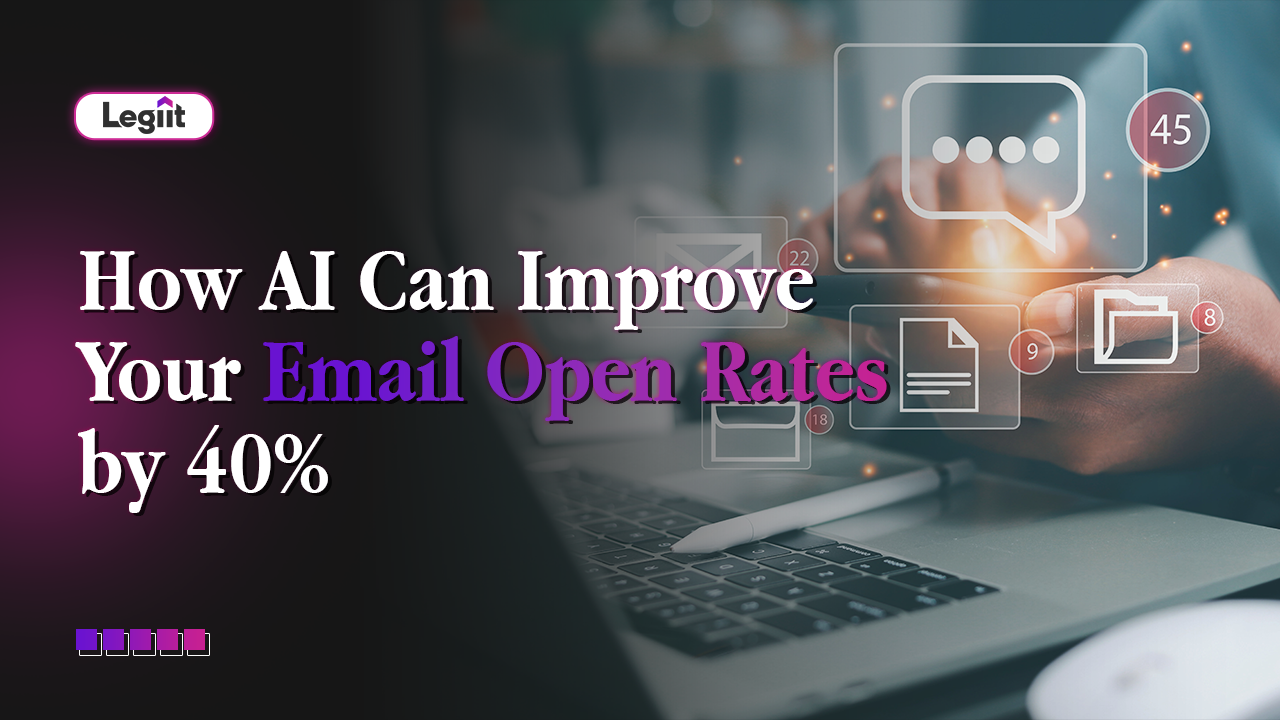
Artificial Intelligence has fundamentally changed the math of email marketing. It does not just make your process faster; it makes your strategy smarter. By analysing millions of data points that no human brain could process, AI can predict exactly what will make your specific subscribers click.
This guide breaks down exactly how AI tools can stack small wins, better timing, smarter subject lines, and cleaner lists to drive a massive 40 per cent lift in your open rates.
The Science of the "Perfect" Subject Line
The subject line is the gatekeeper. If it fails, nothing else matters.
In the past, writing subject lines was an art. You relied on gut feeling. You might try a pun, a question, or a shocking statement.
AI turns this art into a science. Tools powered by Natural Language Generation (NLG) do not just write copy; they analyse it. Before you ever hit send, an AI tool can score your subject line based on emotional sentiment, character count, and keyword impact.
It knows that your specific audience reacts better to "Urgency" (e.g., "Last chance to save") than to "Curiosity" (e.g., "You won't believe this"). It can generate fifty variations of a subject line in seconds and predict which one will win with 90 per cent accuracy. This eliminates the "blind A/B test" where you waste half your list on a losing headline.
Smart Send Time Optimisation (STO)

The oldest myth in email marketing is that there is a "best time" to send an email. You will read blog posts claiming that "Tuesday at 10 AM" is the magic hour.
This is nonsense. Tuesday at 10 AM might be great for a corporate executive, but it is terrible for a nurse working a night shift or a student in a different time zone.
Averages lie. Individuals tell the truth.
AI Send Time Optimisation (STO) looks at the individual behaviour of every single person on your list. It seems that Subscriber A always opens emails at 6:45 AM while drinking coffee, and Subscriber B opens them at 8:30 PM after the kids go to bed.
When you schedule a campaign with AI, you do not blast everyone at once. The system holds the email and delivers it to Subscriber A at 6:45 AM and Subscriber B at 8:30 PM.
This ensures your email is always at the top of the inbox when the user is actually holding their phone. This simple shift alone can boost engagement by 15 to 20 per cent.
Hyper-Personalisation Beyond the "First Name"
For a long time, "personalisation" meant putting {First Name} in the subject line.
"Hey John, check this out!"
In 2026, consumers are numb to this. We know it is a script. True AI personalisation goes much deeper. It looks at the context of the user's relationship with you.
Imagine an AI that scans a customer's browsing history on your website. It seems they spent ten minutes looking at leather jackets, but didn't buy.
- Old Way: Send a generic newsletter about "New Arrivals."
- AI Way: Send a targeted email with the subject line: "Still thinking about that leather jacket?" and include a dynamic image of the exact item they viewed.
This level of relevance signals to the user that opening your emails is actually worth their time. When users realise your emails are relevant to their immediate interests, they stop scrolling past them.
The Invisible Hero: List Hygiene and Deliverability
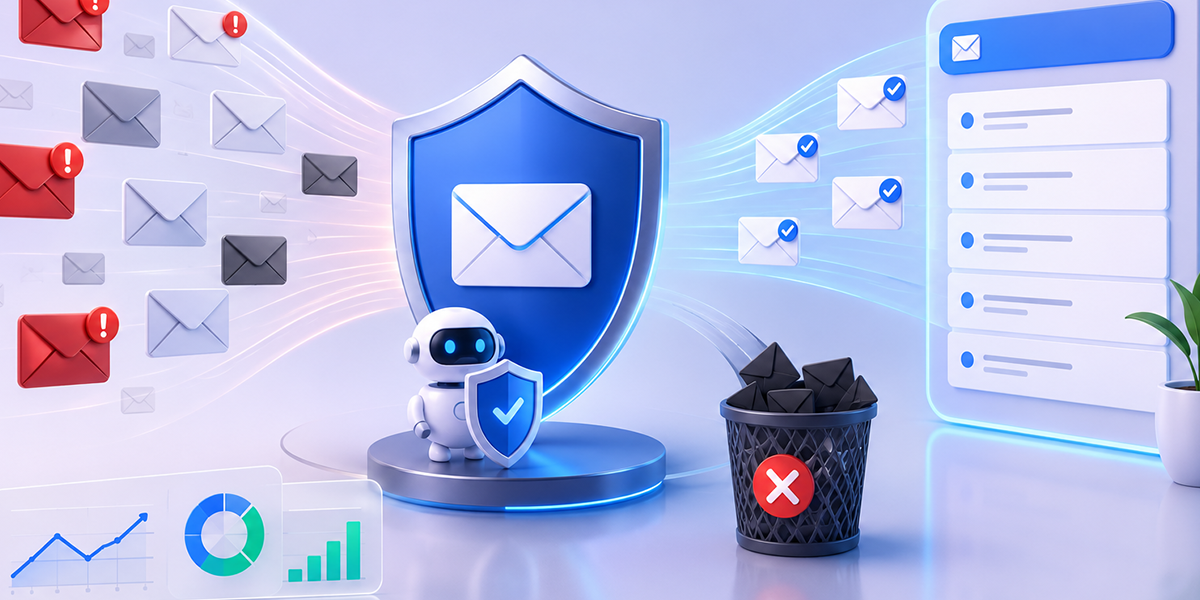
Sometimes your open rates are low, not because people are ignoring you, but because they never saw your email in the first place.
If you keep sending emails to inactive accounts, full inboxes, or "spam traps," providers like Gmail and Outlook punish you. They start sending your emails straight to the Junk folder.
AI acts as a 24/7 security guard for your list. It monitors engagement signals in real time. If a subscriber hasn't opened an email in six months, the AI can automatically tag them as "At Risk" and stop sending to them, or trigger a specific "Wake Up" campaign.
By automatically pruning the dead weight, you improve your "Sender Reputation." This tells Gmail that you are a high-quality sender, ensuring your emails hit the Primary Inbox for the people who actually want to read them.
Final Verdict
Improving your open rates by 40 per cent does not happen by changing one thing. It happens by fixing the entire system.
It is the combination of writing better subject lines (AI copywriting), sending them at the exact right moment (AI email timing), ensuring they land in the Primary Inbox (AI deliverability), and making the content impossible to ignore (AI personalisation).
You cannot do this manually. You physically cannot analyse the sleep schedules and browsing habits of 10,000 subscribers. But AI can.
If you are ready to stop guessing and start knowing, you need to implement these tools. But setting them up requires technical skill. You need to connect APIs, configure data flows, and train the models.
This brings us back to our pillar resource: The Top 7 Freelancers to Automate Your Email Marketing with AI. These experts can audit your current setup, turn on these advanced AI marketplace features, and hand you the keys to a high-performing, automated engine that gets your emails read.
FAQ: AI and Open Rates
Q: Can AI really guarantee a 40% increase?
A: No tool can "guarantee" human behaviour. However, 40 per cent is a realistic target when you combine the lift from multiple AI strategies. For example, optimising send times often yields a 15 per cent lift, while personalised subject lines can add another 20 per cent. The cumulative effect is massive.
Q: How does AI know the best time to send emails?
A: It uses historical data. The AI looks at the timestamps of when a specific user opened your previous emails or visited your website. It builds a profile of their "active hours" and predicts the window when they are most likely to be holding their device.
Q: Is AI personalisation creepy?
A: It can be if you overdo it. There is a line between "helpful" and "stalker." Good AI marketing uses data to be helpful (showing products they liked) rather than invasive (referencing personal private data). The goal is relevance, not intrusion.
Q: Do I need to change my email provider to use AI?
A: Not necessarily. Many top email platforms (like Klaviyo, HubSpot, and Mailchimp) have built-in AI features now. For more advanced features, you can hire a freelancer to connect third-party AI tools to your existing email software via API.
Q: Will AI write my emails for me?
A: It can draft them, but it shouldn't replace you. AI is excellent at generating ideas, subject lines, and variations, but a human should always review the final copy to ensure it sounds authentic to your brand voice.







 Download