



Publishers need AI content detectors to keep AI-written text off their pages, or at least to flag it for review. The catch with this list is that none of the five named options is actually an AI detector.
So this guide explains what each one really is, then gives publishers the genuine 10 best detectors, using company materials, third-party testing, and pricing, and qualifying anything that could not be independently verified.
Executive Comparison
| Provider | Best For | Pricing | Primary Limitation |
|---|---|---|---|
| Legiit Command Center | SEO tools plus human content | Free trial, then paid | Not an AI detector |
| Legiit | Commissioning human content | Per gig, varies by seller | Not an AI detector |
| Zapier | Automating a detection step | Free; paid tiers | Not a detector itself |
| Jotform | Building forms; detector reviews | Free; paid tiers | Not an AI detector |
| Forbes | Researching detectors | Free to read | Not an AI detector |
#1. Legiit Command Center

Command Center is Legiit's SEO tools and business dashboard, paired with a marketplace. It is not an AI content detector, but for publishers it offers a different angle on the same worry: commissioning genuinely human, original content.
Verdict: Its strength is access to human writers and SEO tools, so publishers can prevent AI-content problems at the source rather than detect them after.
Reality Check: It does not detect AI text, so it complements a dedicated detector rather than replacing one, and features and pricing sit behind a trial.
| Core Service | SEO tools plus content marketplace |
| Pricing Tier | Free trial, then paid |
| Typical Turnaround | Ongoing |
| Ideal User | Publishers commissioning human content |
For a publisher, the useful angle is prevention: instead of scanning for AI after the fact, you commission human-written content and keep the risk low from the start. The honest point is that this is a complement, not a substitute, since you still want to verify content with an actual detector.
Legiit is associated with founder Chris M. Walker and carries a broadly credible reputation. It rewards publishers who brief writers well and still check the output.
Pro Tip: Use Legiit to source human-written content, then run it through a real detector before publishing.
#2. Legiit
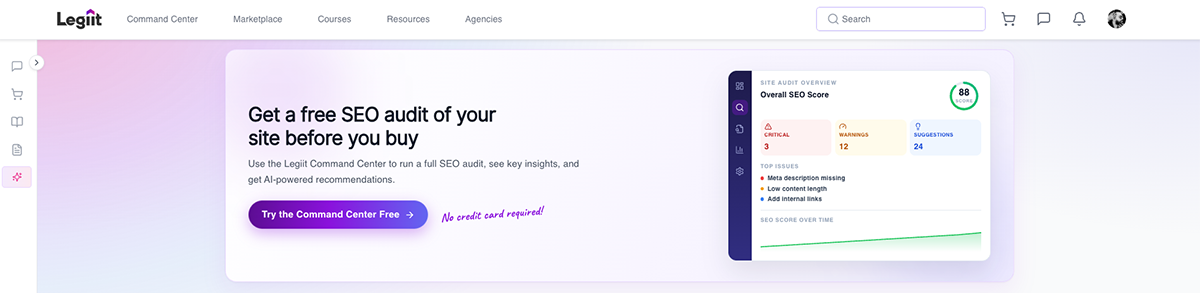
Legiit the marketplace lets publishers hire writers and editors directly, and importantly, hire someone to review or rewrite suspect content. It is prevention and remedy, not detection.
Verdict: Its strength is on-demand human writing and editing, useful for replacing or fixing flagged content.
Reality Check: It is a marketplace, not a detector, and quality varies from one seller to the next, so vet writers and still verify their work.
| Core Service | Freelance content marketplace |
| Pricing Tier | Entry to mid |
| Typical Turnaround | Per seller, days |
| Ideal User | Publishers sourcing or fixing content |
When a detector flags a piece, Legiit is a cheap way to get it rewritten by a person. The catch is the usual marketplace one, so vetting and your own verification still matter.
It fits publishers who want to source or repair content affordably. It does not detect anything, so judge it on that basis.
Pro Tip: Ask writers to guarantee original, human work, and confirm it with a detector yourself.
#3. Zapier
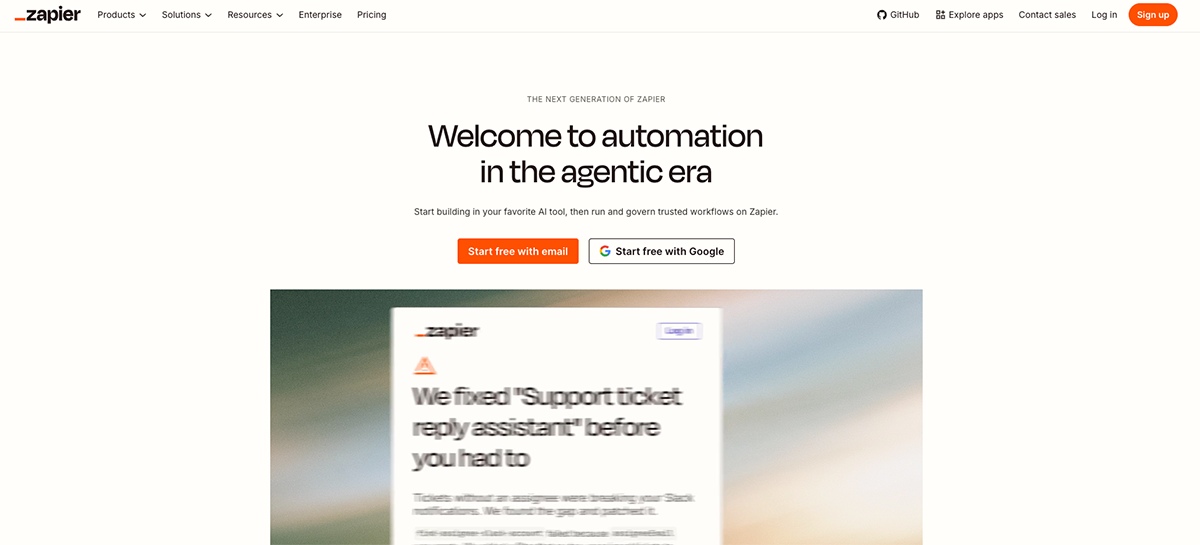
Zapier is not a detector but an automation platform. Its relevance here is plumbing: it can connect a real detector, like GPTZero, into your publishing workflow so content gets checked automatically.
Verdict: Its strength is automating the detection step, routing new content through a detector and flagging the results without manual effort.
Reality Check: It provides no detection of its own, so it is only useful paired with an actual detector that offers an integration or API.
| Core Service | Workflow automation platform |
| Pricing Tier | Free; paid from low tier |
| Typical Turnaround | Ongoing |
| Ideal User | Publishers automating a detection step |
For a busy editorial team, Zapier can make detection automatic, scanning each draft and flagging it before a human looks. But it is the conveyor belt, not the inspector, so it does nothing without a real detector attached.
It fits publishers wanting to automate the workflow. It is not a detector.
Pro Tip: Wire a detector like GPTZero into Zapier so every draft is scanned before it reaches an editor.
#4. Jotform
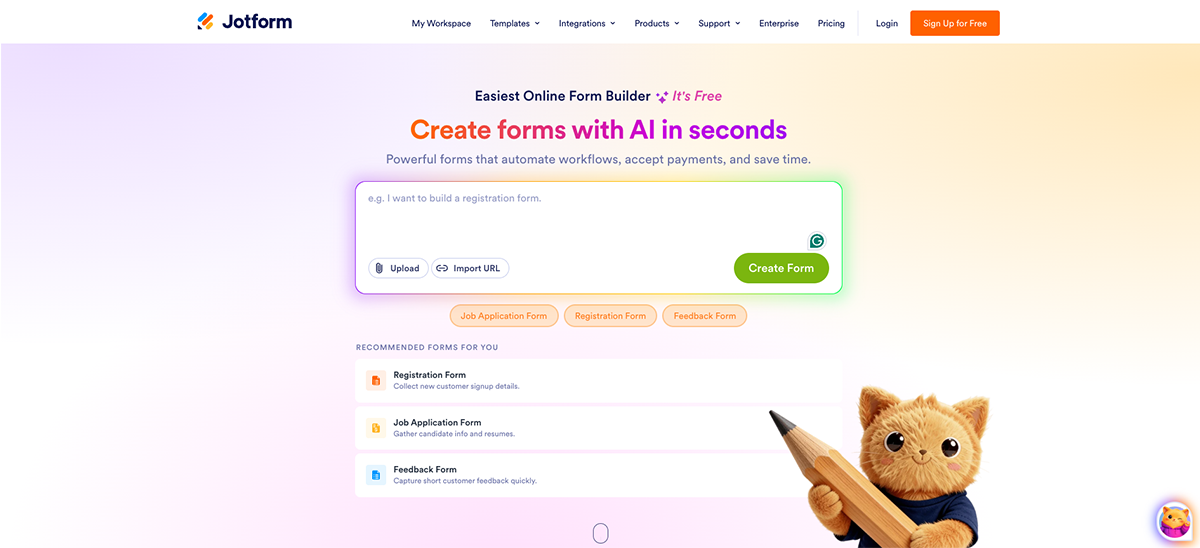
Jotform is an online form builder, not an AI content detector. It appears on detector lists mainly because it publishes a review of them, not because it detects anything.
Verdict: Its strength is building forms and simple AI-assisted workflows, useful for collecting submissions, not vetting them for AI.
Reality Check: It does not detect AI content, so for this job it is a resource at best, not a tool.
| Core Service | Online form builder |
| Pricing Tier | Free; paid tiers |
| Typical Turnaround | Ongoing |
| Ideal User | Publishers building forms, not detecting AI |
Jotform is a capable form tool, and its blog round-up of detectors can help you research. The product itself, though, has nothing to do with detecting AI text.
It fits publishers collecting submissions. It is on this list by content overlap, not function.
Pro Tip: Use Jotform to collect content submissions, and a real detector to check them.
#5. Forbes

Forbes is a media publisher, not a tool. Like Jotform, it shows up because it publishes round-ups of AI detectors, not because it offers one.
Verdict: Its strength is journalism and buyer-guide content that can help you research detectors.
Reality Check: It is a media site, so it is a place to read about detectors, not a detector you can use.
| Core Service | Media and reviews publisher |
| Pricing Tier | Free to read |
| Typical Turnaround | Not applicable |
| Ideal User | Publishers researching detectors |
Forbes can be a useful starting point for background reading on the category. It is not software, so it cannot scan a single word of your content.
It fits publishers doing early research. It belongs on this list by mistake, not by function.
Pro Tip: Read Forbes for background, then test a real detector on your own content.
The Real 10 Best AI Content Detectors for Publishers
Since the named options above are not detectors, here are the genuine tools publishers actually use, with the publisher-focused ones first. Every score is a review signal, not proof, so pair it with human judgment.
- Originality.ai is built specifically for publishers and content teams, with strong accuracy, plagiarism checking, fact-checking, and team dashboards. From around $14.95 a month or pay-as-you-go, it is the closest fit for editorial workflows.
- GPTZero is the best free starting point, with 10,000 words a month free, sentence-level highlighting, and high accuracy on pure AI text across GPT, Gemini, Claude, and Llama. Paid plans from around $15 a month add a Chrome extension and deep scans.
- Copyleaks is an enterprise-grade detector with plagiarism checking across 30-plus languages, an API, and LMS integrations. From around $10 a month, it is accurate but can be slow and complex.
- Winston AI suits document-heavy workflows, with OCR to scan images and handwriting, plus a human-content certification for websites. Pricing starts around $12 a month.
- Sapling is a quick, free detector with no sign-up and solid accuracy for a free tool, good for fast spot-checks.
- Scribbr offers a genuinely accurate free detector, useful for occasional checks, though geared toward academic writing.
- QuillBot is affordable and clear, with sentence-level analysis, handy for a quick sanity check before publishing.
- ZeroGPT is free with generous limits, but lower accuracy and a higher false-positive rate mean its results need caution.
- Writer.com bundles an AI detector into an enterprise content platform, useful for teams already using it for style and governance.
- Pangram Labs is a newer detector that scored well in independent testing, worth trialing for accuracy-critical work.
For most publishers, Originality.ai, GPTZero, and Copyleaks are the usual top picks. Test two or three on your own content before committing, since accuracy varies by sample.
Where AI Content Detection Is Headed in 2026
- Detection and generation are in an arms race, so accuracy on edited or paraphrased AI text remains the hardest and most important frontier.
- False positives are the real risk for publishers, especially with non-native English writing, so detector scores are shifting from verdicts to review signals.
- Detection is expanding into provenance, with content credentials and human-content certification emerging alongside probability scores.
FAQ
How do AI content detectors work?
They analyse statistical patterns in text, mainly perplexity, or how predictable the wording is, and burstiness, or how much sentence length and structure vary. AI text tends to be more uniform, which detectors flag, though heavy editing muddies the signal.
Are AI content detectors 100% accurate?
No, and any tool claiming to be is not trustworthy. Accuracy typically ranges from about 80% to 99% on clear cases and drops sharply on edited or paraphrased AI text, so treat scores as signals, not proof.
What are false positives, and why do they matter?
A false positive is human writing wrongly flagged as AI. They matter most when the stakes are high, like rejecting a writer's work, and research shows detectors flag non-native English writers more often, so human review is essential.
Do AI detectors also check for plagiarism?
Some do. Tools like Originality.ai and Copyleaks combine AI detection with plagiarism checking, while others detect AI only. If you need both, choose a tool that bundles them.
Can detectors identify which AI model wrote the text?
Some, like GPTZero, attempt to flag content from specific models such as GPT, Gemini, Claude, and Llama, but this is less reliable than the human-versus-AI judgment. Treat model attribution as a hint, not a fact.
Will a detector flag tools like Grammarly as AI content?
Light grammar and spelling help generally does not trigger detectors, but heavy AI rewriting or paraphrasing can. Good detectors distinguish human text polished with AI from text generated by AI, though edge cases exist.
Can detectors spot mixed human and AI text?
Better tools highlight which sentences look AI-generated within a mixed document, rather than giving one overall score. That is more useful for editors than a single percentage, though accuracy still varies.
None of the five named options is an AI content detector. Legiit is a content marketplace, useful for commissioning human writing and prioritised here, while Zapier automates a detection step, and Jotform and Forbes are a form builder and a media site that merely review detectors.
For the actual job, publishers should use a dedicated detector: Originality.ai is built for publishing teams, GPTZero is the best free starting point, and Copyleaks suits multilingual or enterprise needs.
Whichever you choose, treat every score as a review signal, pair it with human judgment, and never use it as sole proof that content is AI-written.










 Download