

Many e-commerce businesses invest heavily in advertising while overlooking the long-term value of search visibility.
Paid campaigns stop generating sales the moment the budget runs out, but a well-executed SEO strategy continues delivering qualified traffic, customers, and revenue for months or even years.
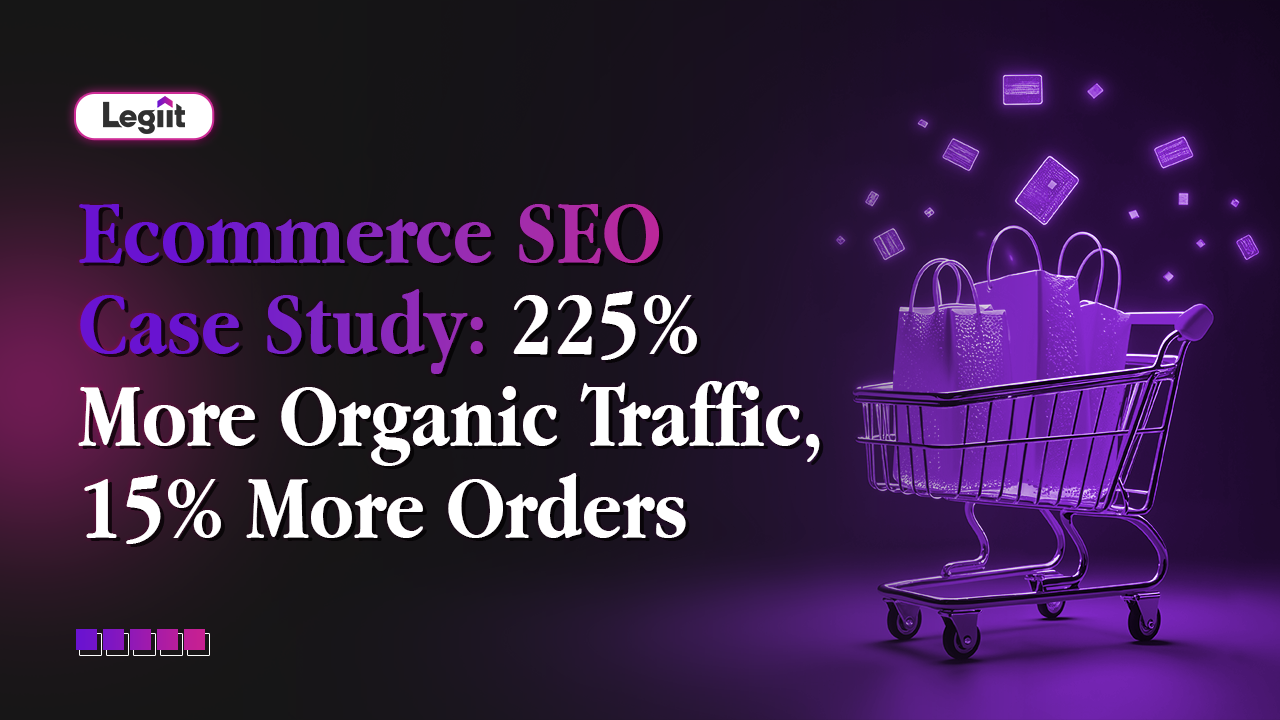
This case study explores how a Shopify-based e-commerce store transformed its organic performance over a six-month engagement by improving technical SEO, strengthening topical authority, optimising commercial pages, and preparing the website for the evolving landscape of AI-powered search.
To protect client confidentiality, the brand name has been omitted.
The Challenge
Despite offering hundreds of products and maintaining an active e-commerce presence, the website's organic growth had stalled. Rankings for high-value commercial keywords remained inconsistent, while competitors continued gaining market share.
A comprehensive SEO audit revealed several issues that limited both crawl efficiency and search visibility.
The most significant challenges included:
- Google Search Console indexing errors
- Multiple 404 pages reducing crawl efficiency
- Thin category pages with limited topical depth
- Missing and duplicate metadata
- Poor heading hierarchy across important landing pages
- Weak internal linking between products and collections
- Product pages lacking search intent optimisation
- Slow discovery of newly published pages
- Several blogs contained contextual outbound links pointing to competitor ecommerce stores, reducing the site's commercial focus and potentially sending users to alternative retailers before completing a purchase.
- Limited entity signals and semantic relevance compared to competitors dominating search results
Individually, these issues appeared manageable. Together, they created a weak SEO foundation that prevented the website from reaching its full organic potential.
Building a Long-Term SEO Strategy
Instead of chasing short-term ranking gains, the campaign focused on strengthening every layer of the website's organic ecosystem.
The objective was simple:
Improve discoverability, increase topical authority, enhance user experience, and create a website that search engines and increasingly AI search engines could confidently understand and recommend.
Phase 1: Technical SEO Foundation
The first step involved improving crawlability and indexability.
Technical improvements included:
- Resolving Google Search Console indexing issues
- Fixing broken pages and redirect chains
- Cleaning low-value URLs
- Optimising XML sitemaps
- Improving robots.txt configuration
- Strengthening overall site architecture
These improvements enabled search engines to spend more crawl budget on valuable commercial pages rather than wasting resources on unnecessary URLs.
Phase 2: Optimising Commercial Pages
Many ecommerce websites invest heavily in blog content while neglecting the pages that actually generate revenue.
Instead, the strategy prioritised commercial landing pages.
Each important category page was expanded with helpful, intent-driven content covering:
- Product types
- Buying considerations
- Semantic keyword variations
- Related entities
- Frequently asked questions
- Contextual internal links
- Optimizing Meta title and description
Every product page received improvements including:
- Optimised titles
- Better meta titles and descriptions
- Improved product copy
- Improved keyword targeting
- Enhanced user experience
The content wasn't written for keyword density; it was written to satisfy search intent.
Phase 3: Internal Linking and Semantic SEO
Internal linking became one of the strongest contributors to improved crawl efficiency.
Products, collections, buying guides, and supporting pages were connected using a logical topical structure.
This helped search engines understand relationships between entities while improving navigation for customers.
Rather than treating pages as isolated assets, the website evolved into an interconnected knowledge graph where every important page supported another.
Phase 4: Strengthening Commercial Relevance
During the content audit, another issue became apparent. Several informational pages contained contextual outbound links directing users to competitor ecommerce stores.
While external links can be valuable when they point to authoritative, non-competing resources, linking directly to businesses selling similar products created unnecessary user exits from high-converting pages.
As part of the optimisation process:
- Contextual links to competitor websites were reviewed and removed where they did not provide unique value to users.
- Internal links were added to relevant product categories, collections, buying guides, and complementary products instead.
- Pages were restructured to keep users engaged within the website's own content ecosystem while still providing comprehensive information.
This improved the user journey, strengthened topical relationships between commercial pages, and reinforced the website's commercial intent without sacrificing content quality.
Phase 5: Preparing for AI Search
Search is changing rapidly.
Traditional SEO focuses on helping search engines rank pages. Modern SEO also requires making content easier for AI systems to interpret and cite.
During the optimisation process, pages were restructured around clear topics, descriptive headings, related entities, and complete answers to common customer questions.
Product categories were expanded beyond basic descriptions to include buying guidance, usage scenarios, and frequently asked questions.
This semantic approach improved not only traditional search visibility but also the site's visibility in AI-powered search experiences such as Google AI Overviews, ChatGPT, Gemini, Perplexity, Copilot, and Grok.
By the end of the campaign, the website had measurable visibility across multiple AI search platforms.
Results
Organic Clicks Increased by More Than 225%
Over six months, organic clicks grew from approximately 10,000 to more than 32,500, demonstrating sustained growth rather than short-term spikes.
The increase was driven by stronger rankings across both category and product pages, improved indexing, and better topical coverage.

Organic Orders Increased by 15%
Business outcomes, not rankings alone, should ultimately measure SEO success.
The improvements translated into increased customer acquisition, with overall ecommerce orders rising by 15% compared to the previous period.
This growth reflected a healthier mix of qualified organic traffic reaching high-converting commercial pages.

Revenue Growth Across Top-Selling Products
Several high-performing products experienced substantial sales growth after optimisation.
Some products achieved increases exceeding 200%, while others recorded growth ranging between 20% and 175%.
These gains were supported by stronger category visibility, improved product optimisation, enhanced internal linking, and increased authority.
Rather than relying on a single bestseller, revenue growth was distributed across multiple product categories.

Increased Visibility Across AI Search Platforms
As AI-powered search continues to reshape how people discover products, the website also expanded its visibility beyond traditional search results.
The campaign resulted in citations and appearances across multiple AI ecosystems, including:
- Google AI Overviews
- ChatGPT
- Google AI Mode
- Perplexity
- Gemini
- Microsoft Copilot
- Grok
This demonstrates that modern SEO is no longer limited to ranking in Google's blue links. Building strong entities, semantic relationships, and comprehensive topical coverage increasingly influences how AI systems retrieve and recommend information.

Key Lessons
This project reinforced several important principles about modern ecommerce SEO.
- Technical SEO creates the foundation that allows search engines to crawl and understand a website efficiently.
- Topical authority is built by optimising the pages that matter most, not simply publishing more content.
- Internal linking strengthens semantic relationships while improving crawl efficiency and user navigation.
- Finally, SEO is evolving beyond traditional rankings. Websites that invest in entities, semantic optimisation, structured information, and comprehensive content are better positioned to appear in AI-powered search experiences.
Final Thoughts
The most successful ecommerce SEO campaigns are rarely driven by a single tactic. Sustainable growth comes from improving every layer of the website, from technical health and site architecture to content quality, authority, and semantic relevance.
This project demonstrates that when technical SEO, on-page optimisation, and AI search readiness work together, the results extend beyond higher rankings.
They lead to increased traffic, stronger visibility, more orders, higher revenue, and a future-proof presence across both traditional search engines and emerging AI platforms.





 Download