

Traditional SEO reacts. Predictive SEO prepares.
For as long as digital marketing has existed, SEO has been a backwards-looking discipline. We publish content, wait weeks for Google to index it, and then check our dashboards to see how we performed. Rankings are measured after the results have already happened, leaving most businesses in a perpetual cycle of playing catch-up with their competitors.
AI has fundamentally changed this timeline. We are moving away from a world of "What happened?" to a world of "What is about to happen?" By using AI to detect early signals in search data, businesses can now anticipate shifts in demand and claim top rankings before the competition even realises there is a race.
Why Traditional SEO Is Always One Step Behind
The limitation of traditional SEO lies in its reliance on historical data. Standard keyword tools report search volume based on what people searched for last month or even last year. By the time a keyword shows "high volume" in your favourite SEO tool, every major brand in your industry is already fighting for it.
Traditional SEO is reactive:
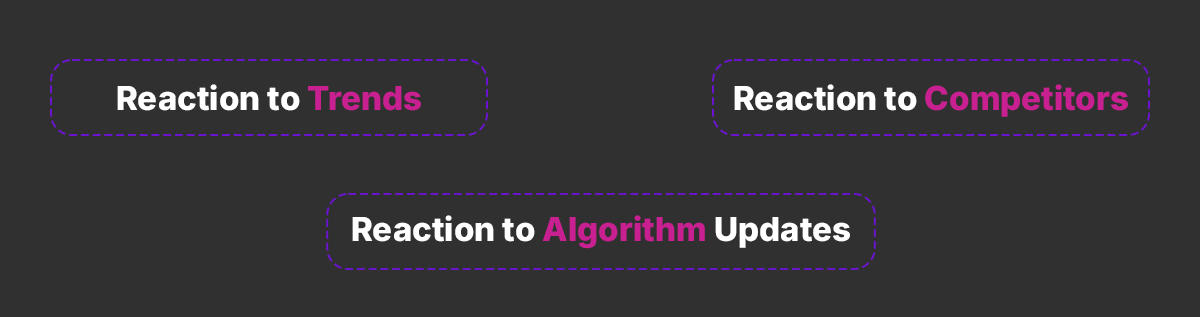
- Reaction to Trends: You see a spike in traffic for a topic and decide to write about it, but the peak has already passed.
- Reaction to Competitors: You notice a competitor is outranking you for a key term and spend weeks trying to figure out why.
- Reaction to Algorithm Updates: Your traffic drops after a Google update, and you spend the next month trying to "fix" what went wrong.
Predictive SEO replaces this guesswork with foresight, allowing you to build authority while the opportunity is still wide open.
What Is Predictive SEO?
Predictive SEO is the process of using artificial intelligence and data analytics to forecast future search trends and optimise content accordingly. It is about identifying ranking opportunities before they become highly competitive.
In simple terms, Predictive SEO means:
- Detecting Early Signals: Identifying rising topics on social media or forums before they reach Google Search.
- Forecasting Demand Shifts: Predicting how seasonal or cultural events will change what people search for.
- Identifying Opportunities: Finding keyword "gaps" where search intent is growing but high-quality content does not yet exist.
- Prioritising Content: Focusing your budget on the topics that will be most valuable three to six months from now.
Opportunity Type #1: Emerging Keywords Before Volume Appears
This is the most powerful advantage of predictive AI. Most businesses ignore keywords with "0 Search Volume" because they look like a waste of time. However, new queries almost always show up as questions in niche communities long before they register in a keyword tool.
AI identifies semantic similarities and growth curves. If a new technology or cultural shift starts being discussed on Reddit or specialised forums, AI can predict the exact phrasing people will eventually use on Google.
Example: Imagine an AI tool detects a sudden surge in people asking "how to store energy from home solar panels without a battery" on DIY forums. Even if the search volume on Google is currently zero, the AI recognises this as a rising semantic trend. You can publish a definitive guide on that topic now. By the time the search volume hits 10,000 per month, you will have months of established authority and backlinks, making you nearly impossible to unseat.
Opportunity Type #2: Ranking Windows Competitors Haven’t Entered
Predictive SEO allows you to see "ranking windows", specific periods where the difficulty of a keyword is temporarily low before it becomes saturated.
AI models can analyse competitor activity patterns. If a major competitor typically refreshes their content in Q3, the AI might identify a window in Q1 where their content is "decaying" and vulnerable. By launching your optimised content during this window, you can climb the rankings faster and establish a foothold that is harder for them to reclaim later.
Opportunity Type #3: Content Refresh and Decay Prediction
Most articles on SEO focus on new content, but the real hidden opportunity is in Forecasting Decay. AI can analyse your existing pages and predict exactly when their rankings will start to slip based on search intent shifts and competitor momentum.
Instead of waiting for your traffic to drop to zero, predictive AI tells you: "This article on 'Remote Work Trends' will lose its Top 3 position in 60 days because the information is becoming outdated." This allows you to refresh the content, add new data, and maintain your ranking without ever experiencing a dip in traffic.
Measuring Success in Predictive SEO
Measuring success in a predictive model looks different from traditional rank tracking. You are looking for "early-mover" indicators rather than just current position:
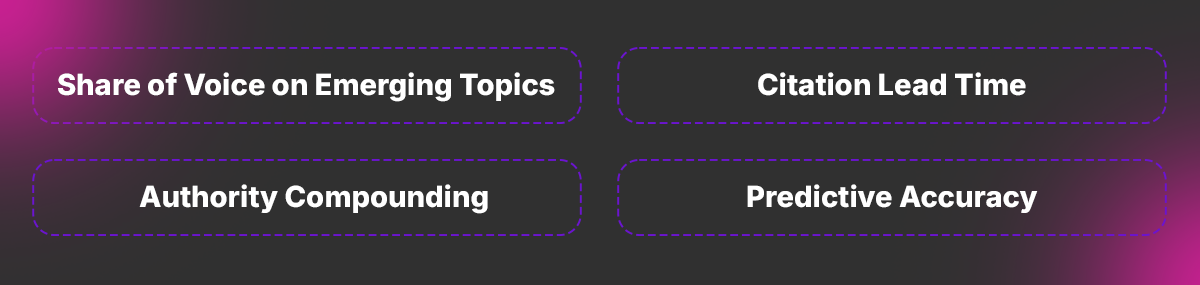
- Share of Voice on Emerging Topics: Are you the first brand mentioned when a new topic starts trending?
- Citation Lead Time: How many days or weeks ahead of your competitors did you publish on a rising trend?
- Authority Compounding: Are your "0 volume" keywords now growing in volume and bringing in traffic?
- Predictive Accuracy: How often did the AI correctly forecast a rise in search demand?
Final Verdict
In the search landscape of 2026, being "fast" is no longer enough. You have to be "first."
Traditional SEO is a race to see who can react to Google's changes the best. Predictive SEO is about changing the race entirely so that you are already at the finish line when the starting gun goes off. By focusing on emerging signals, ranking windows, and content decay, you stop fighting for scraps and start owning the most valuable real estate in your industry.
Mastering these AI-driven forecasts requires a unique blend of technical data science and creative content strategy.
You don't have to build these complex models yourself. Some specialists live in the data and know exactly how to spot these future opportunities.
FAQ: Navigating Predictive SEO
Does predictive SEO replace keyword research?
No, it enhances it. You still need to know what people are searching for now, but predictive SEO adds a "future layer" that tells you what they will search for next.
Is predictive SEO only for big brands with huge budgets?
Actually, it is a massive advantage for small businesses. Big brands move slowly. A small business using predictive AI can spot a trend and publish content in 48 hours, capturing the market before the giant corporations even have their first strategy meeting.
What tools are used for predictive SEO?
Many modern SEO platforms are adding predictive features, but specialised AI tools that analyse social sentiment, forum discussions, and real-time news are the most effective for forecasting trends.
Is it risky to write about keywords with zero search volume?
It is only a "risk" of your time. However, if the AI detects a strong semantic signal, the risk is very low. Even if the volume stays low, you often capture very high-intent users who are looking for specific answers.







 Download