



SEOClerks is a freelance marketplace where you buy link-building gigs, so a real alternative should let you do the same. Most tools grouped under that label do not, ranging from outreach software to UX research that has nothing to do with links.
This review sorts five named options using company materials, third-party reviews, and pricing, and qualifies anything that could not be independently verified.
Executive Comparison
| Provider | Best For | Pricing | Primary Limitation |
|---|---|---|---|
| Legiit | Buying link gigs from vetted freelancers | Per gig, varies by seller | Quality swings by seller |
| SuperstarSEO | Learning while you buy | Varies; training priced separately | Storefront runs through Legiit |
| Skrapp | Finding emails for your own outreach | Free tier, then paid plans | Supplies contacts, not links |
| Uberall | Local listings for multi-location brands | Subscription, quote-based | Citations, not editorial links |
| Baymard | E-commerce UX research | Subscription and audit pricing | No link building at all |
#1. Legiit
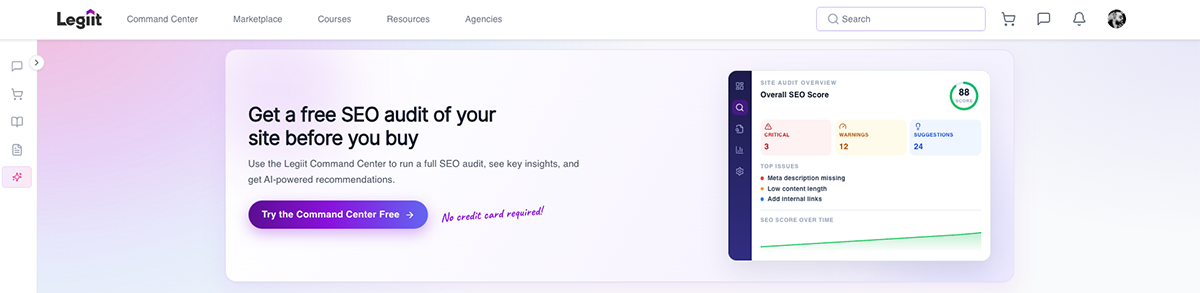
Legiit is the closest direct SEOClerks alternative, a freelance marketplace where you buy link-building gigs such as guest posts and niche edits from individual sellers. You browse listings, check ratings, and order without contracts.
Verdict: It does what SEOClerks does, with an active SEO seller base and visible accountability: ratings, completion rates, and buyer protection.
Reality Check: Quality and risk vary from one seller to the next, so careless buying can leave you with weak or irrelevant links.
| Core Service | Freelance link and SEO marketplace |
| Pricing Tier | Entry to mid |
| Typical Turnaround | Per seller, days to weeks |
| Ideal User | Buyers who will vet sellers and want choice |
Choice and price are the strengths, and the review system gives more recourse than an anonymous gig. The weakness is that no one curates quality for you, so due diligence is yours.
Legiit is associated with founder Chris M. Walker and carries a broadly credible reputation. It rewards careful buyers and punishes anyone who orders on price alone.
Pro Tip: Ask for the exact destination site and its metrics before ordering, and test a seller with one small placement first.
#2. SuperstarSEO
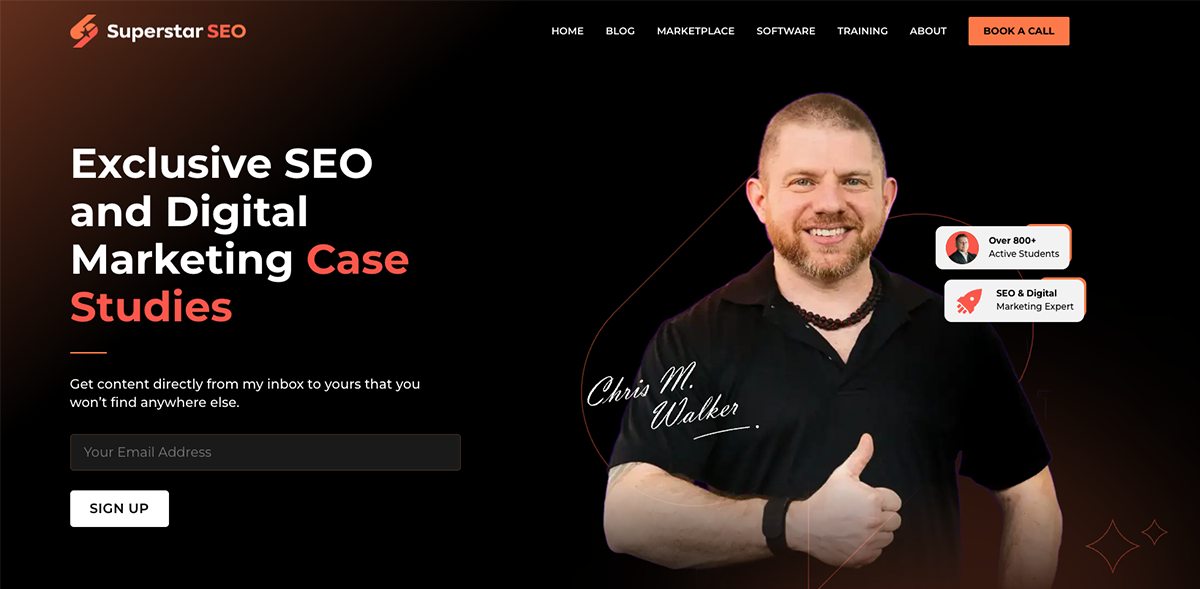
SuperstarSEO pairs link services with training and shares a founder with Legiit. It suits buyers who want to learn what a good link looks like before spending.
Verdict: The education is the real value, helping buyers judge link quality rather than gamble on it.
Reality Check: Its storefront resolves to a Legiit profile, so the links come from the same marketplace you could reach directly.
| Core Service | SEO training plus a marketplace storefront |
| Pricing Tier | Low to mid |
| Typical Turnaround | Varies by service |
| Ideal User | Buyers who want to learn while they buy |
The training and the founder's practitioner reputation are the strengths. As a separate source of links, it adds little, since fulfilment runs through the shared marketplace.
Treat it as a way to set your quality criteria, not a distinct inventory. Anyone expecting a separate platform should know where the orders land.
Pro Tip: Use the training to define what you will and will not buy, then transact on Legiit.
#3. Skrapp
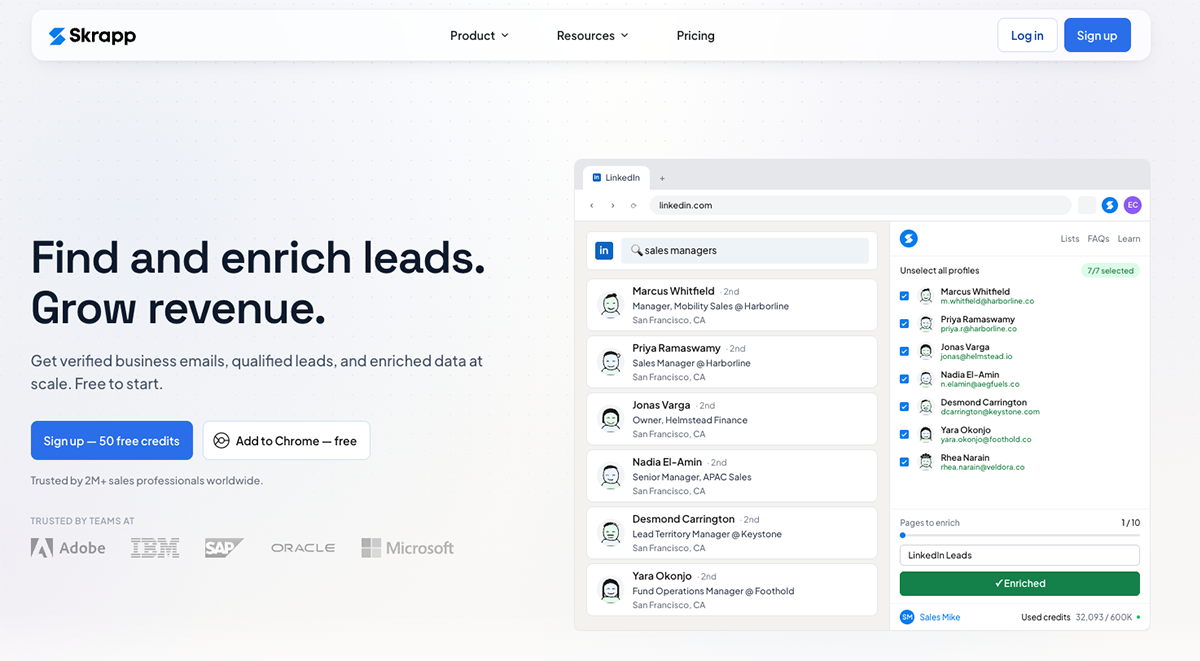
Skrapp is not a link-building marketplace. It is a B2B email finder that locates contact addresses, which link builders use to pitch site owners and editors for placements.
Verdict: For do-it-yourself outreach, its strength is finding verified emails quickly, with a free tier and CRM integrations.
Reality Check: It supplies contacts, not links, so it only helps if you are running your own outreach and writing your own content.
| Core Service | B2B email finder for outreach |
| Pricing Tier | Free tier, then paid plans |
| Typical Turnaround | Instant lookups |
| Ideal User | DIY link builders running their own outreach |
Skrapp reports more than two million users and names clients such as Adobe and IBM, which speaks to its credibility as a prospecting tool. The catch for this topic is simple: an email address is only the start of earning a link.
It fits marketers and agencies who handle outreach in-house. It does nothing for buyers who want links placed for them.
Pro Tip: Pair Skrapp with a real placement route, since finding an editor's email is only step one of earning a link.
#4. Uberall
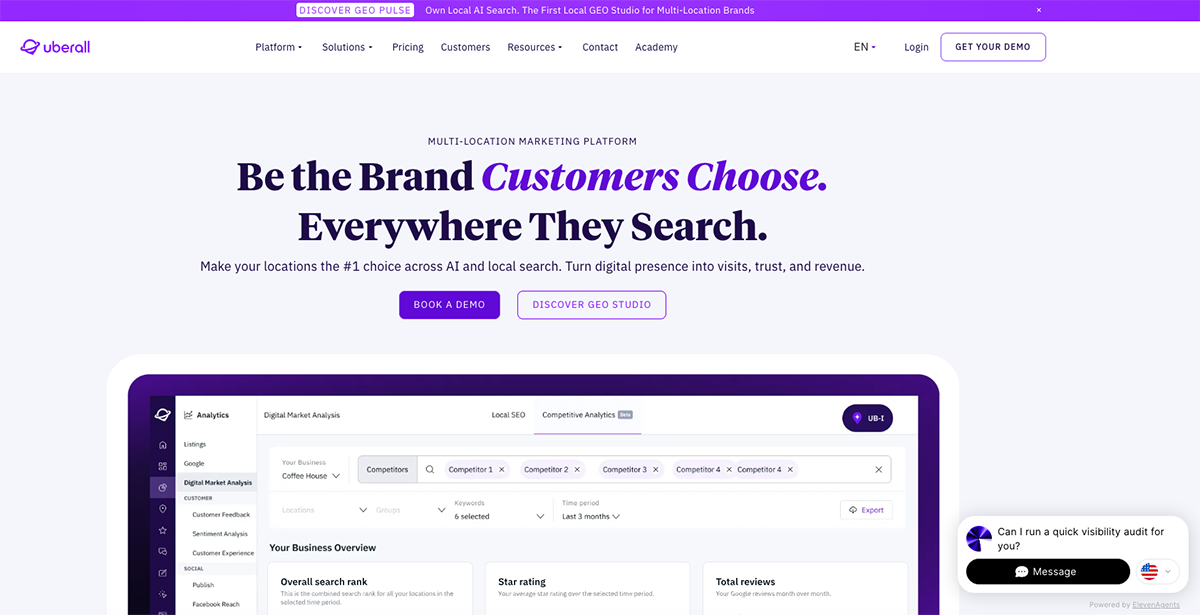
Uberall is a location marketing platform, not a link-building service. It manages business listings across 150-plus directories and maps for multi-location brands.
Verdict: Its strength is local presence at scale, keeping name, address, and phone data consistent and surfacing locations in local and AI search.
Reality Check: It builds directory listings and citations, not editorial backlinks, so it is not an SEOClerks alternative for link building.
| Core Service | Local listings and location marketing SaaS |
| Pricing Tier | Subscription, quote-based |
| Typical Turnaround | Platform, ongoing |
| Ideal User | Multi-location brands managing local presence |
For a chain or franchise, Uberall genuinely helps local visibility, and citations do play a minor role in local SEO. They are not, however, the editorial links an SEOClerks shopper is looking for.
It suits multi-location businesses managing local discovery. It is the wrong tool for anyone seeking authority backlinks.
Pro Tip: Use Uberall for local citations if you run many locations, and a separate route for editorial links.
#5. Baymard
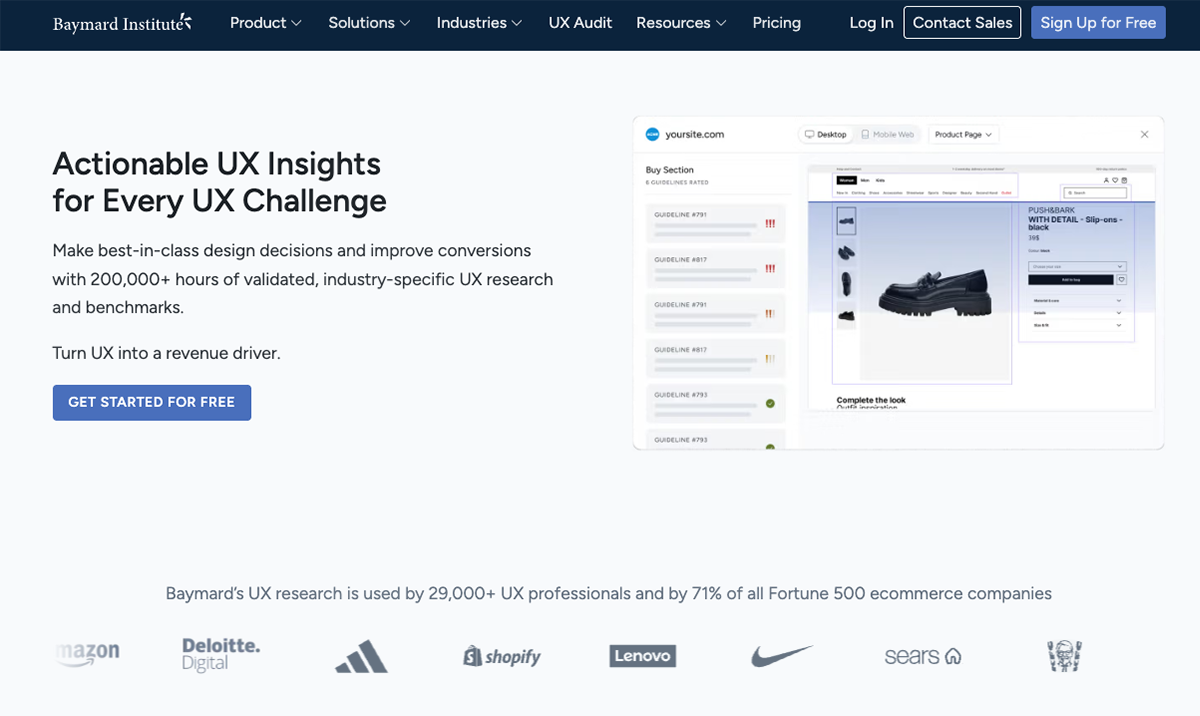
Baymard Institute has nothing to do with link building. It is an e-commerce UX research firm known for checkout and usability benchmarks used across major retailers.
Verdict: Its strength is rigorous, evidence-based UX research, drawn on by most Fortune 500 e-commerce brands.
Reality Check: It offers no link-building service of any kind, so it does not belong in this comparison at all.
| Core Service | E-commerce UX research and audits |
| Pricing Tier | Subscription and audit pricing |
| Typical Turnaround | Research access, ongoing |
| Ideal User | E-commerce teams improving UX and conversion |
Founded around 2008 by Christian Holst and Jamie Appleseed, Baymard rests on a deep library of usability testing and guidelines. That work is valuable, just entirely unrelated to backlinks.
It fits e-commerce teams fixing UX and conversion. It is irrelevant to anyone wanting links.
Pro Tip: Use Baymard to improve conversion and UX, and look elsewhere entirely for links.
Where Link Building Is Headed in 2026
Google keeps rewarding relevance and real traffic over volume, so cheap marketplace links matter less than placements on sites people actually visit.
AI search increasingly cites trusted, well-linked sources, making genuine authority-building more valuable than raw link counts.
Outreach is getting harder and more automated at the same time, so buyers lean on vetted marketplaces or managed services rather than chasing links alone.
FAQ
Are backlinks still important for SEO in 2026?
Yes, links remain a core ranking signal and a trust cue for both Google and AI search. Quality and relevance now matter far more than sheer volume.
What is the difference between do-follow and no-follow backlinks?
Do-follow links pass ranking signals, while no-follow links tell search engines not to. A natural profile includes both, and paid links are meant to be no-follow or sponsored.
How long does it take to see results from link building?
Most effects appear over one to three months, assuming the rest of your SEO is sound. Anyone promising instant ranking jumps is overselling.
Is guest posting safe under Google's guidelines?
It is when posts are genuine, relevant, and editorial, but large-scale paid guest posting for rankings breaks Google's rules. Focus on real sites with real audiences.
What types of sites should backlinks come from?
Relevant sites with genuine organic traffic and topical authority are worth far more than high-score sites with no visitors. Avoid link farms and irrelevant directories.
The Bottom Line
Only two of these are real SEOClerks alternatives. Legiit is the strongest direct option for buying link-building gigs, and SuperstarSEO mainly routes back to it while adding training.
The other three solve different problems: Skrapp finds emails for your own outreach, Uberall manages local listings, and Baymard is UX research with no link-building role at all. If your goal is buying link building, start with Legiit, and treat the rest as adjacent tools at best.








 Download