The landscape of building a digital presence has shifted fundamentally in 2026.
Five years ago, you either learned to code or you hired someone who already knew how.
Today, no-code tools like Bubble, Webflow, and Wix Studio have evolved from "simple site builders" into sophisticated development environments.
According to recent analysis from UseFreelance, no-code development has become one of the top freelance niches for beginners and businesses alike.
This creates a new, high-stakes decision point for every startup and established brand.
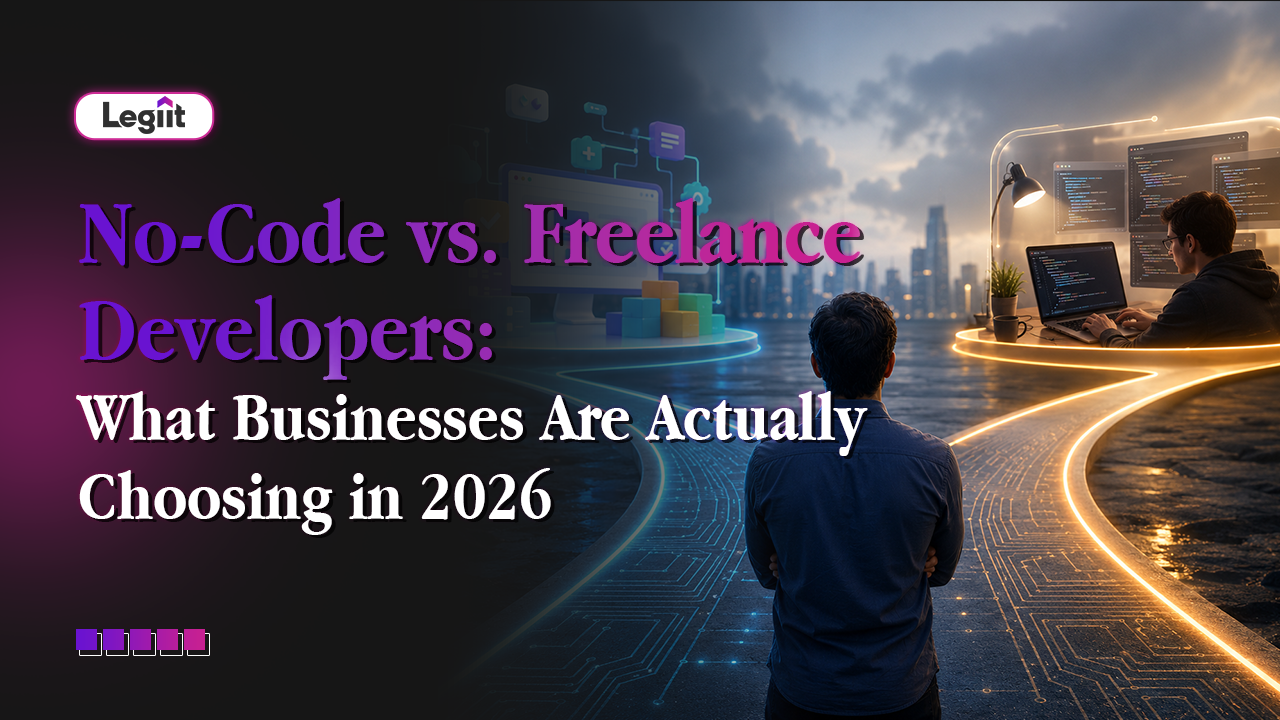
Should you build it yourself (or hire a no-code specialist) for speed, or invest in a custom freelance developer for long-term power?
Here is what the data and market trends of 2026 tell us about what businesses are actually choosing.
The 2026 Reality: The Rise of the Minimum Viable Product (MVP)
In 2026, speed to market is the only currency that matters.
Most new businesses are choosing no-code platforms to launch their first version.
This allows a founder to go from an idea to a live, functioning website in 48 hours rather than four weeks.
No-code tools now handle complex logic, allowing for "smart" features that previously required thousands of lines of code.
However, as these businesses grow, they often hit what experts call the "No-Code Ceiling."
Understanding the No-Code Ceiling
No-code is brilliant until you need something truly unique.
Businesses are finding that once they require deep API integrations or custom-built databases, generic builders begin to struggle.
Here are the three main "walls" businesses hit with no-code in 2026:
- Vendor Lock-in Risk: On most no-code platforms, you do not own the underlying code; if the platform raises prices or goes bust, you cannot easily move your site.
- The "Code Bloat" Problem: No-code tools generate heavy background scripts to make the "drag-and-drop" work, which can slow down your site.
- Scalability Caps: When your traffic hits millions of hits per month, the subscription costs of no-code platforms can actually become more expensive than hosting a custom site.
Why High-Growth Brands Still Choose Freelance Developers
While no-code owns the "startup" phase, custom development still owns the "scale" phase.
In 2026, businesses that need to rank #1 for high-competition keywords are moving back to custom code.
Custom-coded sites (built with frameworks like Next.js or traditional PHP/Python) offer "Elite" speed scores.
Google’s 2026 Core Web Vitals are more aggressive than ever regarding page load times.
A freelance developer can strip away every unnecessary script, ensuring your site loads in under 500ms.
Furthermore, if your business requires a client login portal or a custom calculator—like a moving quote tool or a complex financial dashboard—custom code is the only way to ensure 100% security and accuracy.
The No-Code vs. Custom Developer Comparison
To help you decide, here is how the two paths stack up across the most important business metrics:
| Feature No-Code | e (Wix/Bubble/Webflow) | Freelance Developer (Custom) |
|---|---|---|
| Launch Speed | 1 to 7 Days (Best for MVPs) | 2 to 6 Weeks (Focus on Quality) |
| IP Ownership | Rented (Subscription-based) | Owned (You own the source code) |
| SEO Performance | Moderate (Due to code bloat) | Elite (Clean, lean, and fast) |
| Total Cost | Low upfront, high monthly fees | High upfront, low monthly fees |
| Security | Platform-dependent | Custom-hardened and private |
The 2026 "Hybrid" Trend
The most successful businesses in 2026 aren't actually choosing one or the other.
They are choosing both.
A common strategy today is using a no-code builder for the "front-end" marketing pages because they are easy to change and update.
Simultaneously, they hire a freelance developer specialising in programming & technology to build the "back-end" logic, such as the user database or the payment processing engine.
This hybrid approach gives businesses the flexibility of no-code with the unshakeable power of custom programming.
When Should You Choose No-Code?
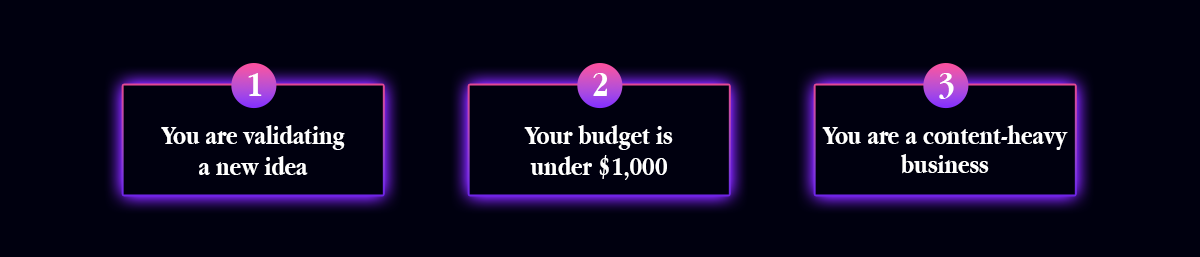
No-code is the right choice for your business if:
- You are validating a new idea: You don't want to spend $5,000 on code for a business that might change next month.
- Your budget is under $1,000: No-code allows you to get professional results without the high engineering costs.
- You are a content-heavy business: If you just need a blog or a simple portfolio, no-code is more than sufficient.
When Should You Hire a Freelance Developer?
You should invest in a professional developer if:
- Data Security is Priority #1: If you are handling sensitive medical or financial data, you need a custom-built "fortress."
- You need a "Proprietary" tool: If your value proposition is a unique algorithm or tool, you cannot build that on a template.
- You are playing for the #1 Spot: If your business lives or dies by SEO, the speed advantage of custom code is non-negotiable.
The Business Landscape in 2026: Trends to Watch
As we move through 2026, several small business trends are dictating these choices.
In India and the US, we are seeing a surge in "Micro-SaaS" businesses,small, highly profitable tools built by solo founders.
Many of these are started on no-code, but the "most profitable" ones eventually migrate to custom code to save on platform fees.
Whether you are starting a weird business that makes millions or a traditional service, your "Tech Stack" is now your most important business asset.
Frequently Asked Questions
Q: Is no-code cheaper than hiring a developer in the long run?
A: Not necessarily. While no-code is cheaper to start, the monthly "pro" fees for platforms like Bubble or Webflow can exceed $100–$300 per month as you grow, whereas a custom site costs very little to host.
Q: Can a no-code site rank on the first page of Google?
A: Yes, but it is harder. You will have to work twice as hard on your content and backlinks to make up for the slower technical speeds inherent in most no-code builders.
Q: Which is better for a business starting in India in 2026?
A: For Indian startups, no-code is currently exploding because it allows for rapid testing in a highly competitive market. However, for "High-Ticket" service businesses, a custom site builds more trust with international clients.
Q: Can I convert a no-code site into a custom site later?
A: You can't "convert" it automatically. You would essentially have to hire a developer to rebuild the site from scratch while looking at your no-code version as a blueprint.
Q: What is the most successful small business idea for 2026?
A: The most successful ideas right now are "Service-Based AI Agencies." These are businesses that use no-code and AI to automate tasks for traditional industries like construction or law.
The Strategic Bottom Line
In 2026, the "No-Code vs. Developer" debate isn't about which tool is better—it's about which tool fits your current stage.
Use no-code to move fast, break things, and find your customers.
Once you have found your "Product-Market Fit" and your revenue is stable, hire a freelance developer to build your "Forever Home" on the web.
The businesses that win in 2026 are the ones that refuse to get stuck in one lane for too long.





 Download