

If you ask a digital marketer where to spend your budget, you will usually get a biased answer. The SEO expert will tell you that ads are a waste of money. The PPC expert will tell you that SEO takes too long.
For an e-commerce store owner, this debate is dangerous. Relying solely on one channel is a single point of failure.
In 2026, the winning strategy is not "SEO or PPC." It is "SEO and PPC." They are not opposing forces; they are gears in the same machine.
One provides immediate cash flow, while the other builds long-term equity.
This guide breaks down the SEO vs PPC for ecommerce debate using a "Combined Strategy" approach. Here are the 5 reasons why you need both to survive and scale.
The Growth Cheat Sheet
Here is the quick summary for decision makers:
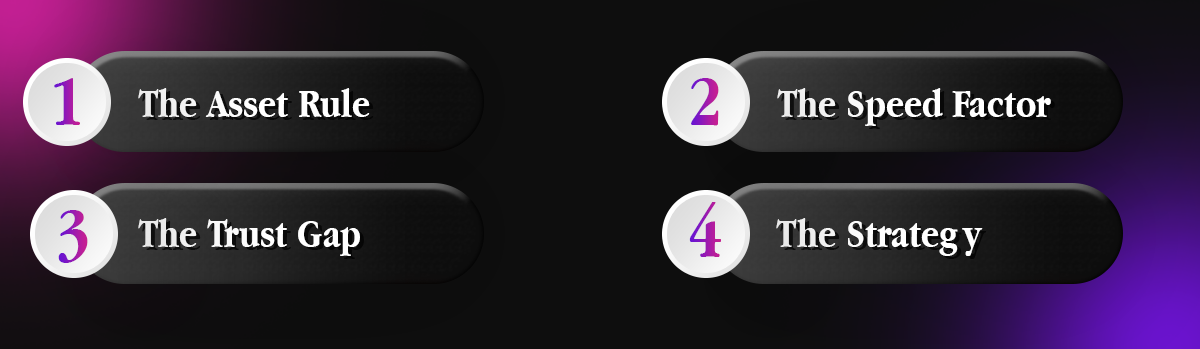
- The Asset Rule: SEO is like buying a house; you own the traffic. PPC is like renting; the traffic stops when you stop paying.
- The Speed Factor: PPC wins in the first 6 months. SEO wins after month 6 when the "cost per acquisition" drops to near zero.
- The Trust Gap: 94% of users skip ads. You need organic rankings to capture the "ad blind" majority.
- The Strategy: Use PPC to test keywords fast. Once you find winners, invest in SEO to rank for them permanently.
On This Page
- Reason 1: The "Ownership vs. Rental" Dynamic
- Reason 2: Speed and Financial Efficiency
- Reason 3: Trust and Ad Blindness
- Reason 4: The "Test & Invest" Hybrid Model
- Reason 5: Launch vs. Core Catalogs
- Comparison Table: SEO vs. PPC
- The Strategic Bottom Line
Reason 1: The "Ownership vs. Rental" Dynamic
Understanding the financial nature of these channels changes how you invest in them.
SEO is Real Estate (Asset)
Treat SEO as buying a home. It requires a high upfront down payment (time, content creation, and optimization), but once you rank, you "own" the traffic. The asset appreciates over time, and the "mortgage" (maintenance) is significantly cheaper than rent. When you rank #1 for a term like "leather boots," that traffic is free every single day.
PPC is Renting (Expense)
PPC is like a lease. You get the keys immediately and can move in instantly, but the moment you stop paying, you are evicted (traffic drops to zero). It is an operational expense, not an asset builder. It is perfect for short term needs, but dangerous to rely on forever.
Reason 2: Speed and Financial Efficiency
Timing is everything in e-commerce.
The 6 Month Rule There is a specific financial crossover point usually around months 3 to 6, where the cumulative cost of PPC exceeds the cumulative investment in SEO.
- Before Month 6: PPC is cheaper and faster for generating initial sales.
- After Month 6: SEO becomes exponentially more profitable as its "cost per acquisition" drops near zero while PPC costs remain linear (or rise with inflation).
Margin Protection
In low-margin e-commerce sectors, PPC costs (Customer Acquisition Cost) can eat the entire profit margin. SEO protects margins long-term because traffic costs remain flat even as sales volume scales.
Reason 3: Trust and Ad Blindness
You cannot buy reputation. You have to earn it.
Ad Blindness
Up to 94% of users actively skip the "Sponsored" section, training themselves to scroll past ads to find "real" information. If you only run ads, you are invisible to the vast majority of potential customers.
Authority Signal
Ranking organically signals that Google "vouches" for you. This implied endorsement leads to higher conversion rates for organic traffic (approx 2.8%) compared to paid traffic (approx 1.9%) for general queries.
Reason 4: The "Test & Invest" Hybrid Model
Smart stores use PPC to make their SEO smarter.
PPC as R&D
Don't just use PPC for sales; use it for market research. Run ads to test which keywords convert into actual sales. You might think "luxury watches" is your best keyword, but ads might reveal that "gold watches for men" converts better.
- The Tactic: Once you identify the "money keywords" via Ads, invest heavily in SEO to rank for them permanently.
The "Second Chance" Strategy
Use PPC to retarget visitors who originally found you via SEO but didn't buy. This combines the "free" initial click of SEO with the "high intent" closing power of ads to maximize ROI.
Reason 5: Launch vs. Core Catalogs

Different products require different engines.
Launch Phase (PPC)
Use PPC for new product launches, seasonal items (e.g., "Christmas sweaters"), and limited time offers.4 SEO is too slow for products that need to sell now.
Core Phase (SEO)
Use SEO for your "evergreen" core catalog that sells year round. Products that will always be in stock should rely on organic traffic to maximize profitability over 3 to 5 years.
Comparison Table: SEO vs. PPC
| Feature | SEO (Organic)
| PPC (Paid) |
| Speed | Slow (3 to 6 months)
| Instant (Minutes) |
| Cost Structure | Upfront Investment (Time/Content) | Pay Per Click (Linear Cost)
|
| Sustainability | Traffic continues after you stop working
| Traffic dies immediately when budget cuts
|
| Best Use Case | "Research" phase & Brand Authority
| "Buy Now" phase & Product Launches |
| Credibility | High (Trust Signal) | Lower (Ad Blindness) |
Need a Hybrid Strategy?
Managing both Google Ads and SEO campaigns can be overwhelming. One requires a mathematician's brain for budgets; the other requires a writer's brain for content.
On Legiit, you can find eCommerce marketing experts who specialize in holistic growth. They can manage your ad spend while simultaneously building your organic rankings.
The Strategic Bottom Line
The choice comes down to timeline and budget.
Start with PPC if you are a new store with zero traffic. You need immediate data and cash flow to validate your product.
Transition to SEO as soon as you have validated your concept. If you stay 100% dependent on ads, your profit margins will eventually be squeezed to zero by rising competition.
Ultimately, the strongest ecommerce brands own their "Real Estate" (SEO) while renting "Billboards" (PPC) for special events. Balance your portfolio today to ensure growth tomorrow.




 Download