


The internet made information search convenient in the 90s and paved way for ecommerce to make shopping easier in the 2000s. Following the same line of development, we now have technologies designed to make eCommerce easier and more convenient, like chatbots.
Chatbots are an increasingly popular development in ecommerce.
Today, an estimated many ecommerce websites use chatbots. This number grows daily as new sites are launched, and older ones get updated. It's almost as if everyone is scrambling to incorporate a chatbot in their online store. But why? What makes chatbots so special for ecommerce? And if you haven’t yet, should you invest in chatbots for your store? Well then, let's take a deep dive into the world of conversational chatbots for ecommerce.
What is a chatbot?
A chatbot is a computer program designed to simulate conversations and other interactions with human users over the internet.
It does so automatically based on a set of predefined triggers, conditions, and/or events.
Think of it as a form of artificial intelligence (AI) used in messaging apps to help add convenience for customers. Chatbots may seem like a recent development. However, the concept has been around since the 60s and only started being applied in eCommerce in recent years.
This is because customers now demand more in the ways they wish to communicate with businesses; a demand best met using chatbots.
Chatbots and the future of Ecommerce
We have seen promising trends burn bright before suddenly disappearing to the fringes of society.
So should we expect the same from chatbots? Or does the future shine brighter today more than yesterday?
To answer this question, we must first understand what customers expect when browsing an online store.
Customers expect to find the information they seek as fast and conveniently as possible. When that doesn’t happen, they won’t make a purchase or even abandon a site forever. So, convenience is a big deal. To put this into better perspective, take a study where Audience, My Clever, and Drift asked thousands of customers to state their frustrations with online businesses. The top 4 complaints were:
- Sites that are hard to navigate
- The lack of answers to simple questions
- Sites where it is hard to find essential details about a business
- Sites where it takes too long to find services
- Getting a quick answer in an emergency
- Resolving a complaint or a problem
- Getting detailed answers or explanations
- Finding a human customer service assistant
This study pretty much proved that customers experience frustrations that businesses expect to solve using chatbots.
Customers want fast and accurate answers to simple questions: they want to find goods and services without scouring every page. And chatbots enable that, making them the future of eCommerce.
The Future is Underway
Statistics show that the rate of chatbot adoption is growing. So much in fact, that a report published by Gartner predicted that half of all enterprise brands would spend more on chatbots than on developing mobile apps in 2021. And according to Statista, the global chatbot market will be worth more than $1.25 billion by 2026.
But how do we know this tech will be accepted in the mainstream? Well, it already is.
When asked, 65% of internet users admitted that they would prefer to ask chatbots and other automated technologies their questions. This is because chatbots provide instant responses, which saves them valuable time. Want another statistic? Millennials currently have the largest spending power of any generation in the US.
This means that their satisfaction is crucial to brands. So, in a recent study published by Forbes, researchers asked millennials about their online experiences. 60% admitted to having used chatbots for customer support, and of these, 70% said they had positive experiences with them. Now, as AI gets better, this proportion of satisfied customers is expected to increase, ushering us into a future of flawless and convenient customer service.
The Benefits of Chatbots
Effective integration of chatbots will revolutionize eCommerce. This is because they carry the following benefits:1. Better customer service
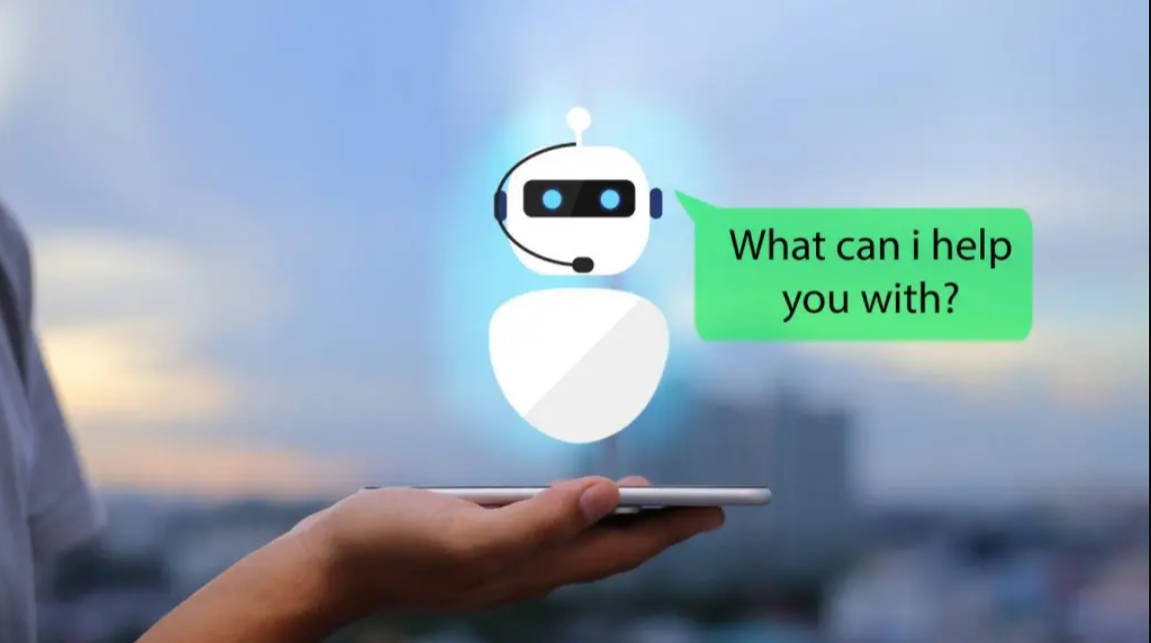
This is the most obvious benefit of chatbots and thus, why you may want a chatbot for your ecommerce website.
Your customers will enjoy quick and more detailed responses to questions, get a fast resolution to complaints or problems, and have an easy and convenient way to communicate with your business. And with good communication comes the opportunity for more business. What else should you expect from chatbots in customer service?
- Integration into chat apps: Chat apps are one of the most popular platforms on the web. They are wide, untapped pools of potential customers. So, chat apps like Facebook Messenger are now integrating chatbot capabilities into their platforms. That way, businesses can engage with their customers right where they are.
- Advances in AI: Smart AI capabilities allow chatbots to predict customers' needs based on past purchase activities. This relatively new feature uses machine learning to understand customer behavior.
- Growing conversation APIs: Conversation APIs allow chatbots to speak to humans using natural language. Thus, the conversation flows so naturally that it almost resembles a human to human one. Some people won’t even realize that they are talking to a chatbot.
- Low development costs: Chatbots are a cheap way to experiment with your customer service. There are tons of options out there; some of them are even free. This means that the upfront costs of using chatbots is minimal. However, you will have to do some conversation mapping on your end.
- Reduced operational costs: Chatbots do what human customer service agents do at a much lower price. They are also available 24/7 and won’t request added pay for the extra hours.
2. Chatbots can improve the return on ad spend(ROAS)
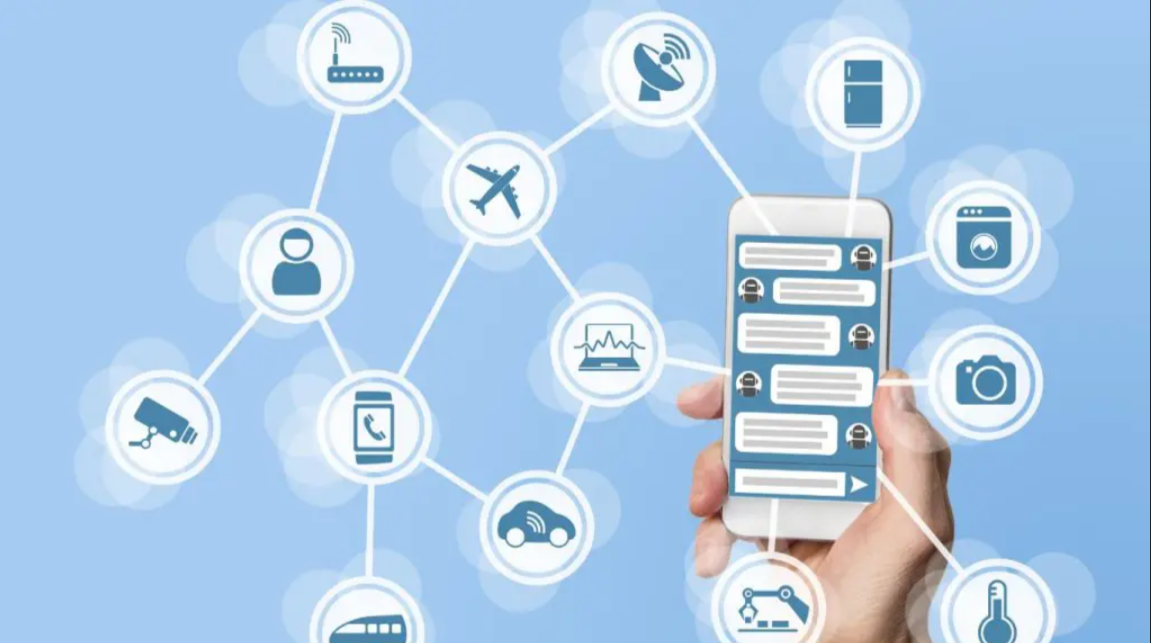
Ecommerce stores do a lot of Facebook and Instagram marketing through ads. In most cases, someone who clicks on the ad is redirected to the store and left to their own devices. So, to increase conversations, ecommerce stores are adding chatbots to this mix to help guide customers in making buying decisions. Here is how:
- Sending users from an ad directly to the chatbot in Messenger: These click-to-messenger ads direct prospective customers to the chatbot before they visit the store. The bot then primes them to purchase by suggesting items and answering questions before sending them to the site to buy.
- Embedding Messenger chatbots on certain website pages: Chatbots can also be designed to pop up and assist users who land on certain pages. That way, the shopper can ask for help when they run into issues or can’t find a product.
- Using chatbot data to improve ad targeting: Once a potential customer engages with a Messenger chatbot, it gets access to their basic Facebook profile data. It can then use quizzes and questions to get more data and save it. Once the business has access to such data from different customers, they can use it to target and retarget them with specialized ads.
3. Onboarding and educating customers
Customers aren’t always sure where to find the information they are looking for. You may have tutorials and guides, but very few are willing to stop shopping and read a guide before continuing. Even for those that go for the guide, there is a possibility that they will get sidetracked and abandon their shopping entirely. So, it's always good to have a guide at hand. One who will ask the customer guide all the right questions and use their answers to direct them to the information they want. This is what a chatbot does. Chatbots are built to automatically direct customers and even window shoppers to where they can get the most value based on their answers. Here’s an example of how the average bot does that:- Hello! My name is This Bot. Can I help you with something?
- What products are you interested in? We sell products A, B, and C.
- Do you want to know more about this product?
- I have an article here with all the details. Would you like to read it?
- Could you provide us with your contact information so I can pass it along to our sales team?
- What time would you like us to call you?
- 80% of customers are more likely to buy when a brand offers personalized experiences
- 49% of customers admitted to purchasing items they weren’t originally planning on buying due to a personalized recommendation.
4. Recovering abandoned carts
Shoppers are a weird bunch. You may do everything right and get them to add items to their cart, but sometimes, they’ll still leave without making a purchase. In fact, this habit is more common than you’d expect: the average cart abandonment rate is over 70%, and we’ve all done it sometime. One way businesses try to deal with this is by stopping it from happening in the first place, i.e., trying to provide as good a pre-purchase experience as possible. This can be done using chatbots, as shown in the previous point. And although the strategy helps reduce the rates, cart abandonment is ultimately inevitable in eCommerce.
So, you still need a cart-reminders strategy, like chatbots. Yeah, unsurprisingly, chatbots are also a good cart-reminders strategy. Ecommerce stores are now using them to send messages to customers reminding them to complete their purchases. Even better is the fact that chatbot reminders are more effective than those from email and other sources.
How effective? Well, up to 7x more effective. This is because of the simple fact that most people open their direct messages than their emails. It's not uncommon to have hundreds or even thousands of unread messages in your email inbox. Take Messenger, for instance, which has 80% open rates and 35% click-through rates compared to the 20% and 2% boasted by email.
Also, 90% of mobile users open text messages within 180 seconds of receipt or at least after realizing that they have a new message.
This means that businesses using Messenger chatbots to remind customers of abandoned carts are way more likely to recover the order than those using email. Note: This method works for those customers who opt in to be contacted. Once their abandonment is noticed, it triggers a notification that is sent via Messenger chatbot directly to their inbox. And since they’re more likely to open and click the message, you get more conversions.
5. Engaging prospects on your Facebook page
Messenger chatbots can also engage with prospects on your Facebook page and drive them towards conversion.
Struggling to wrap your head around that? Think of how bots pop up on your website to guide uncertain users and answer questions from curious customers. That same process can happen with users commenting on your Facebook page posts. It's possible thanks to Messenger bots that automatically reply to commenters.
You can set such chatbots to reply to all comments on a post or those with specific keywords. The former is a great way to ensure interaction with all the prospects engaging with your posts. It also saves you time since you don’t have to reply to every comment yourself. However, such chatbots aren’t employed in every scenario.
They are more commonly used during contests and giveaways and when making new product announcements.
6. Building a multichannel marketing strategy
Chatbots aren’t only good for asking and answering questions. They also allow businesses to provide customers with an omnichannel experience. So this is a pretty effective strategy:- A Google study found that omnichannel shoppers have a 30% higher LTV (lifetime value) than those shopping on one channel.
- Another survey by Aspect Software shows that a brand with a strong omnichannel presence enjoys 90% greater yearly customer retention than one without.
7. Boosts retention and loyalty by providing post-purchase experiences
The customer’s journey doesn't end with the first conversion. You want them to keep coming for more purchases.
Hence, you must provide them with a helpful and memorable post-purchase experience, which boosts your brand’s reputation, customer retention, and lifetime value (LTV). There are several ways that you can enhance your post-purchase experience, one of them being through chatbots. For instance, it's quite possible to use your bot to provide your customers with essential shipping updates.
All you have to do is integrate your chatbot so shoppers that consent can receive notifications on Facebook Messenger.
But is this of any help if users are already receiving updates on email? Yes. For one, shoppers are more likely to view and engage with direct messages than with emails. It’s also an excellent way to stand out in the mind of consumers. The convenience of receiving shipping updates in their DMs will entice them to buy from you again in the future. Other ways that you can enhance your customer’s post-purchase experience using chatbots include:
- Sending manual or walkthrough videos for bought items that require set up or instructions.
- Upselling complementary products for the item. You can even include a coupon code to encourage the purchase.
- Request a rating or send survey questions via bot.
Chatbot Caveats

Conversational chatbots are good for ecommerce. But they are far from being the holy grail of customer support. They have flaws, some potent enough to break your business. These include:
Chatbots can sound too mechanical
Most chatbots aren’t advanced enough to interact with customers as humans. This is because they can only give answers to question and problems they have been programmed to solve. They also:- Cannot answer according to the context or show emotions if needed.
- Cannot maintain a natural-sounding conversation with customers for long.
They can only handle basic questions
If you developed a sale for ranking artificial intelligence, chatbots would be among the most basic. Thus, they can only answer simple questions.
They also only provide general information that is accessible to them. Thus, they tend to fail when answering a script of questions or complicated queries. Fortunately, this is a situation that is getting better by the day. As algorithms and machine learning get better, we’re seeing more advanced chatbots enter the market. These are expected to be the standard in the coming decade.
They require maintenance
Chatbots may not require as many benefits, care, and supervision as human resources do, but you can’t buy one and leave it to answer customer inquiries forever. They need some level of maintenance. And considering that they aren’t physical assets, this sounds a little confusing, right? Well, when you integrate a chatbot into your ecommerce site, you do some conversation mapping depending on your products. But since product lineups change, you have to keep updating the bot to reflect the most up-to-date information.How do you deal with these problems?
Current chatbots aren’t advanced enough to handle everything. Thus, you can’t abandon all customer service functions to your conversational bot. Instead, you are advised to use them as an escalation path to an actual human. This is because as customers interact with your business, their queries are bound to become progressively more complex. For now, the goal should be to keep things simple, especially if you’re on a budget. Advanced chatbots that use Natural Language Processing to mimic human customer support may be an intelligent solution, but they are pretty expensive. Thus, most e-commerce stores are better off using simple chatbots that handle simple customer requests. You should also keep in mind that there isn’t a one-fits-all chatbot solution. Different AI is codded for different industries. For instance, a chatbot for a healthcare site like WebMD is utterly different from one on the average eCommerce site.Set customer expectations
You must set customer expectations from the start concerning your customer service and marketing experience. Your chatbot may be working spectacularly, but what happens when the user pushes it a little further, and it can’t provide the required answers? If the customer didn’t know that they were dealing with a bot, they would be disappointed. But if they did, they would understand the bot’s limited capability and wait for a human to get on the other end of the line.Types of Chatbots
Website chatbots
These are the most popular conversational bots around. They are generally used to greet customers, book appointments, automatically suggest FAQ articles, and guide customers to the next step of the sales funnel. They usually operate within a live chat experience, where the customer will eventually speak to a human agent when they are ready.- The ability to send automated messages and images with CTAs
- Messenger templates that let customers use buttons and visuals to interact with chatbots







 Download