

Buying backlinks is a gamble: the same purchase can lift rankings or trigger a penalty, depending entirely on where the link lands. Vendors rarely make that risk obvious.
This guide reviews five options across the risk spectrum: marketplaces, managed agencies, and an automated network, using company materials, third-party reviews, and pricing pages, and qualifies any claim that could not be independently verified.
One caveat up front: Google's spam policies treat links bought to manipulate rankings as violations, so every option here carries some risk. The real question is how much.
Executive Comparison
| Provider | Best For | Pricing | Primary Limitation |
|---|---|---|---|
| Legiit | Vetted, à la carte link gigs | Per gig, varies by seller | Quality and risk swing by seller |
| SuperstarSEO | Learning to judge link quality | Varies; training priced separately | Storefront runs through Legiit |
| Fatjoe | Standardized white-label links | Per-link menu, low to high | Can't pick sites; still paid links |
| ClickSlice | Agency-managed link campaigns | Premium; $10k+ projects reported | Costly; some disputed results |
| Bzoomer | Cheap, high-volume automation | From ~$39/month | Highest penalty risk; thin track record |
#1. Legiit

For buying links, Legiit works as an open marketplace: you purchase guest posts, niche edits, or HARO placements from individual sellers. Each listing shows ratings and completion data before you commit.
Verdict: It offers the widest selection with real accountability, seller reviews and buyer protection sit in plain view.
Reality Check: Risk rides on the seller, so a careless pick can leave you with links on spun or irrelevant sites.
| Core Service | Freelance link marketplace |
| Pricing Tier | Entry to mid |
| Typical Turnaround | Per seller; days to weeks |
| Ideal User | Buyers who will vet sellers and want choice |
The strength is range and price, with everything from cheap directory links to managed outreach in one place. The weakness is that no one curates quality for you; due diligence is yours alone.
Legiit is associated with founder Chris M. Walker and carries a broadly credible reputation. It suits hands-on buyers, and punishes anyone who orders on price without checking the destination sites.
Pro Tip: Ask each seller for sample domains and live metrics, and skip anyone who won't show where the links actually go.
#2. SuperstarSEO
SuperstarSEO shares a founder with Legiit and leans on teaching as much as selling. Its draw is helping buyers learn what separates a safe link from a toxic one.
Verdict: The education is the real value, useful for buyers who want to judge link quality rather than trust a sales page.
Reality Check: Its storefront resolves to a Legiit profile, so the links come from the same pool you could reach directly.
| Core Service | SEO training plus a marketplace storefront |
| Pricing Tier | Low to mid |
| Typical Turnaround | Varies by service |
| Ideal User | Buyers who want to learn while they buy |
The training and the founder's practitioner reputation are the strengths. As a distinct link source it adds little, since fulfillment runs through the shared marketplace.
Treat it as a way to sharpen your judgment before spending. Anyone expecting a separate inventory of links should know where the orders land.
Pro Tip: Use it to learn what a clean link profile looks like, then transact on Legiit with that lens.
#3. Fatjoe
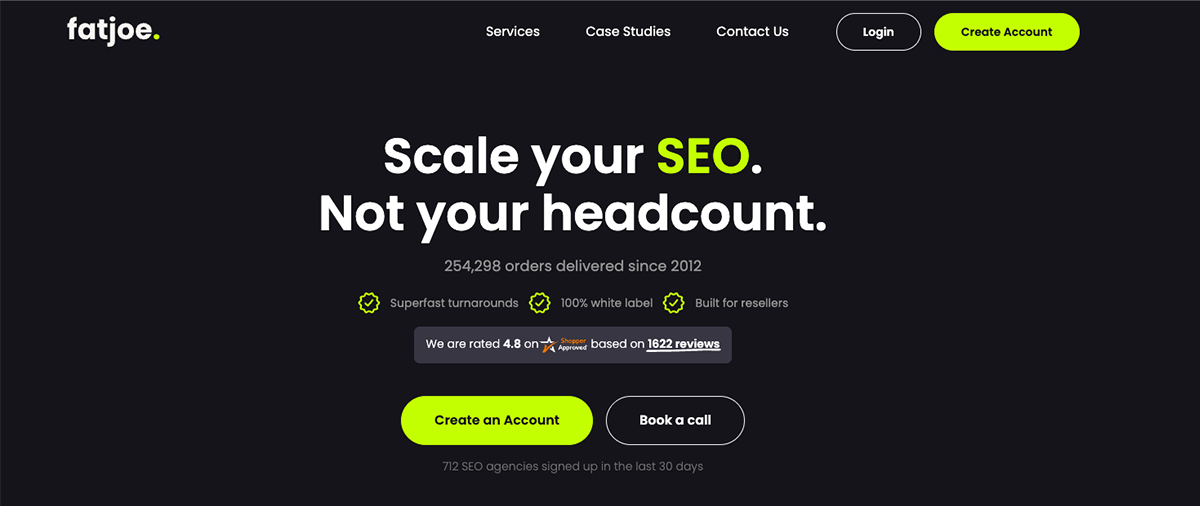
Fatjoe is the most standardized option here, productized blogger outreach, niche edits, and digital PR sold by fixed menu. It is built for agencies to resell under their own brand.
Verdict: Predictability is the strength, with defined DR tiers, white-label reports, and consistent delivery.
Reality Check: You cannot choose specific publications, and these are still paid placements that carry the same policy risk as any bought link.
| Core Service | Productized link building and outreach |
| Pricing Tier | Low to high |
| Typical Turnaround | Around two to three weeks |
| Ideal User | Agencies wanting predictable, resalable links |
Founded in 2012 by Joe Taylor in the UK, Fatjoe reports large order volumes, though those figures are company-stated.
Buyer sentiment describes consistent mid-tier output delivered quickly, with the common critique that automation flattens editorial nuance.
It fits agencies that need repeatable volume with clean reporting. It is a poor match for anyone needing hand-picked, premium editorial placements.
Pro Tip: Set firm relevance and anchor-text rules, and pace orders so a paid profile still looks natural.
#4. ClickSlice
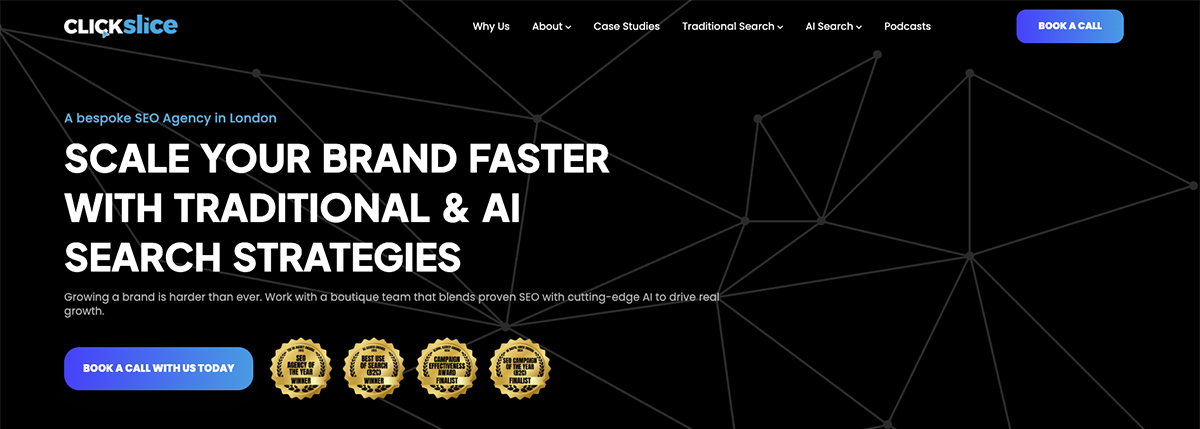
ClickSlice is a London SEO agency, not a self-serve store, that runs link building inside managed campaigns. It is led by Joshua George, a visible UK SEO figure who has run government training and a large ***** course.
Verdict: Its strength is managed, strategy-led link building with agency oversight rather than a cart of anonymous links.
Reality Check: Pricing is steep, Clutch lists $10,000-plus minimum projects, and some Trustpilot clients dispute results, with one citing Search Console data showing clicks fell during the campaign.
| Core Service | Agency-managed link campaigns |
| Pricing Tier | Premium (project or retainer) |
| Typical Turnaround | Ongoing campaign |
| Ideal User | Businesses wanting hands-off, strategic links |
The agency posts strong Clutch feedback, though from a small review count, and advertises a 90-day money-back guarantee.
Its public reputation is mixed rather than uniformly positive: praise for communication and migrations sits beside pointed complaints about unmet expectations over multi-month engagements.
This suits businesses that want links folded into a wider managed SEO strategy. It is wrong for buyers seeking a quick, cheap, one-off purchase.
Pro Tip: Insist on live Search Console and analytics access, and verify any reported gains yourself before renewing.
#5. Bzoomer
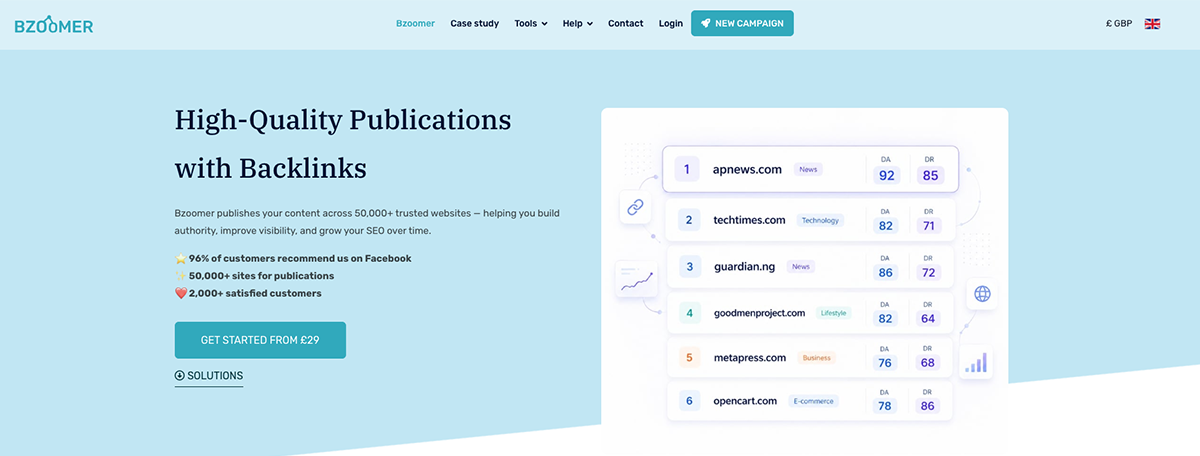
Bzoomer is the outlier, an automated platform that builds tiered backlinks at scale using AI-generated articles across a large network of sites. Packages start cheap and self-serve.
Verdict: Cost and scale are the appeal, with dofollow link packages from around $39 a month and a database the company lists at 50,000-plus platforms.
Reality Check: This is automated link-network building, the highest penalty exposure on this list, and one reviewer warns that some package domains carried gambling and other toxic content.
| Core Service | Automated, tiered link-building tool |
| Pricing Tier | Budget (from ~$39/mo) |
| Typical Turnaround | Gradual over weeks |
| Ideal User | Risk-tolerant DIY buyers chasing volume |
Bzoomer appears to be Czech in origin, and its 2026 "2.0" release claims to add human SEO review of top-tier links. Independent signal is thin, with only around a dozen Trustpilot reviews, so its track record is hard to verify.
It may appeal to risk-tolerant buyers testing cheap volume on low-stakes sites. It is a bad fit for any brand that cannot afford a manual action or a toxic-link cleanup.
Pro Tip: If you test it at all, avoid the bulk packages and hand-pick and vet individual domains, as a reviewer specifically advised.
Where Buying Backlinks Is Headed in 2026
Google's tightening link-spam detection is widening the gap between editorially earned links and automated networks, raising the risk on cheap bulk packages.
AI search rewards mentions and citations from trusted publishers, pulling spend away from raw link volume toward genuine editorial coverage.
Buyers increasingly demand proof, live reporting, real traffic, verifiable domain metrics, and walk from vendors who won't show where links land.
FAQ
What is link building, and why does it still matter?
Link building is the practice of getting other sites to link to yours, which search engines still read as a signal of trust and authority. It matters because competitive terms remain hard to rank for without a credible link profile.
Can buying backlinks actually help my SEO?
It can when the links are relevant and genuinely editorial, and it can backfire when they are cheap, irrelevant, or part of a network. The upside is real, but so is the downside.
How do manually built links differ from automated software links?
Manual or outreach links are placed on real, vetted sites one at a time, while automated tools generate many links across networks with little human checks. Manual work costs more and carries less penalty risk.
Which backlink metrics actually matter: DA, DR, or PA?
Treat third-party scores like DA, DR, and PA as rough filters, not proof, since they are easy to inflate. Real organic traffic and topical relevance tell you far more about a link's value.
How long until bought links show SEO results?
Most providers and case studies point to one to three months before movement, assuming the rest of your SEO is sound. Anything promising overnight results is a warning sign.
What happens if a purchased link gets removed?
Some vendors offer replacements or guarantees, while automated tools often claim permanent placement, so terms vary widely. Confirm the replacement policy in writing before you pay.
How can I tell whether bought backlinks are safe?
Check that links sit on real, relevant sites with genuine traffic, use natural anchor text, and are not stacked on obvious networks. If a vendor won't show you the exact destination, treat that as a red flag.
The Bottom Line
No option is risk-free, so match the choice to your risk tolerance rather than chasing a single winner. ClickSlice and Fatjoe suit buyers who want managed or standardized links with accountability, while Legiit and SuperstarSEO fit hands-on buyers willing to vet sellers themselves.
Bzoomer is only for the risk-tolerant chasing cheap volume, with the penalty exposure that implies, and for any business where a Google penalty would hurt, the safest "place to buy backlinks" is often a route built on genuinely earned, editorial coverage.





 Download