

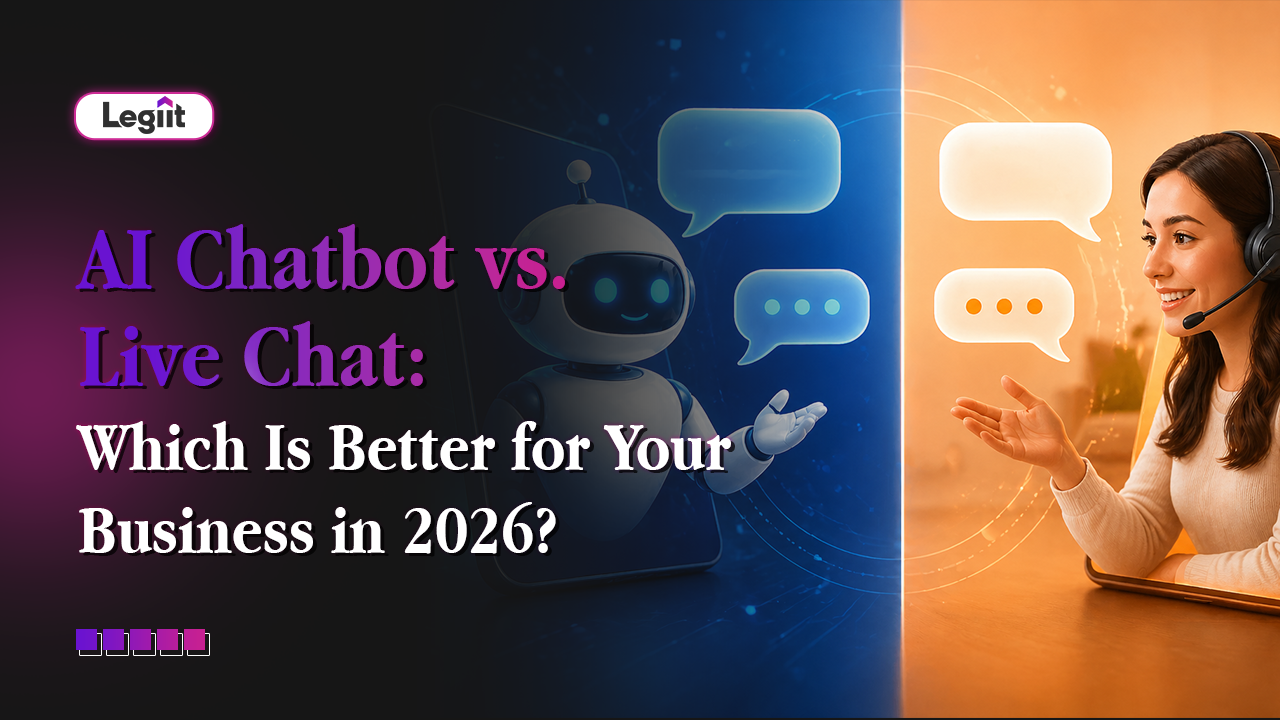
The debate between AI automation and human touch is no longer about machines replacing people. It is about scalability vs. bankruptcy.
For years, Live Chat was the gold standard. It offered the empathy and problem-solving skills that early, clunky bots simply couldn't match. But the landscape of 2026 is radically different. Customer patience has evaporated, labor costs have skyrocketed, and AI technology has evolved from simple scripts to sophisticated, context-aware agents.
If you are a business owner trying to decide where to invest your customer support budget this year, the choice isn't just about preference. It is about math.
Here is the brutal truth about the Human vs. AI showdown and why the smartest businesses are no longer choosing one or the other. They are strategically merging them.
Deep Dive: Live Chat (The Human Touch)
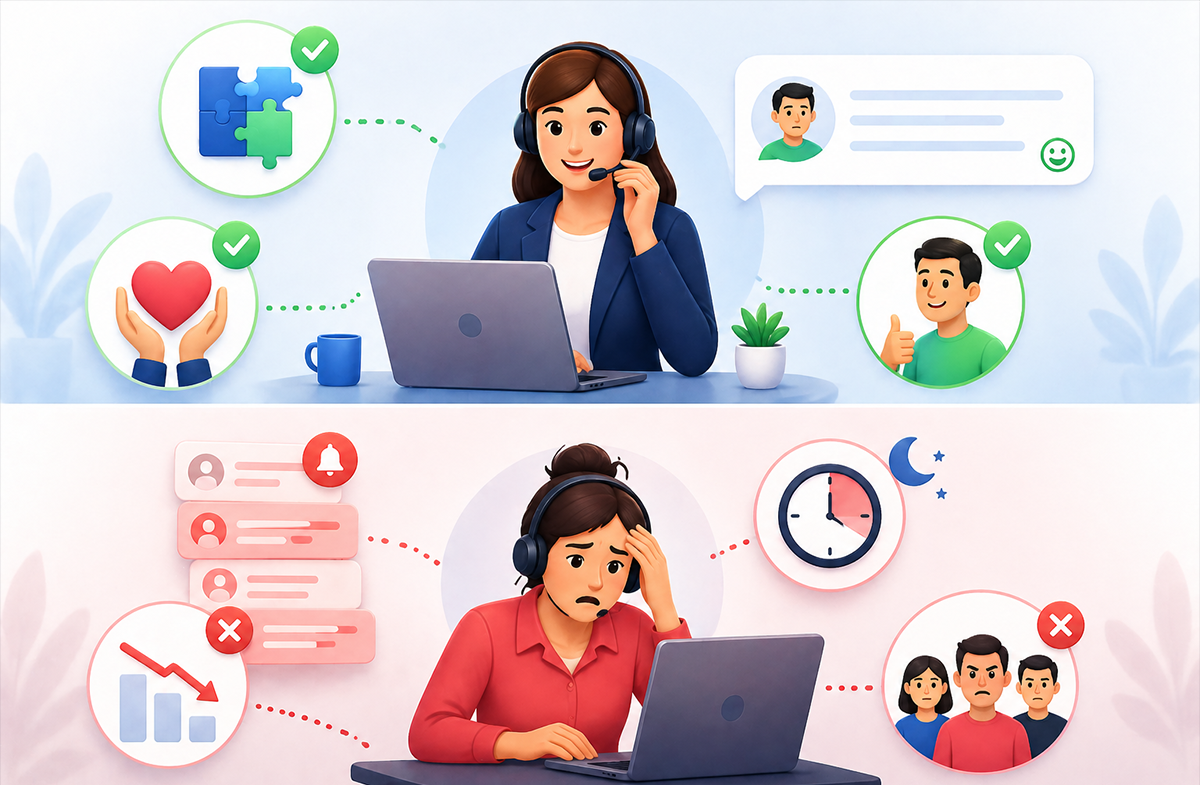
Live Chat puts a real person behind the keyboard. While it feels traditional, it comes with distinct advantages and severe limitations in a modern economy.
The Strategic Advantages
- Complex Problem Solving: When a customer faces a unique, multi-layered crisis, like a complex billing dispute or a sensitive PR issue, human judgment is unbeatable. Humans can read between the lines and negotiate exceptions that software cannot.
- Emotional Intelligence: Empathy builds trust. A human agent can detect frustration and offer genuine reassurance, making them essential for high-touch industries like mental health services or luxury concierge support.
The Operational Limitations
- The Availability Cap: Your human agents need to sleep. They take breaks. They get sick. If you want true 24/7 coverage with Live Chat, you need to hire at least three separate shifts of employees. For most mid-sized businesses, this cost is prohibitive, leaving you with offline hours where leads go to die.
- Queue Fatigue: Humans can only handle 2 or 3 chats simultaneously before quality drops. When traffic spikes during a sale or a product launch, your queue times explode. In 2026, a customer forced to wait 15 minutes for a live agent will simply close the tab and buy from a competitor.
- Inconsistency: Training a human team to maintain a consistent brand voice across every interaction takes months. Even then, bad days happen. Moods affect service. With Live Chat, your customer experience is variable.
Deep Dive: AI Chatbots (The Automation Engine)
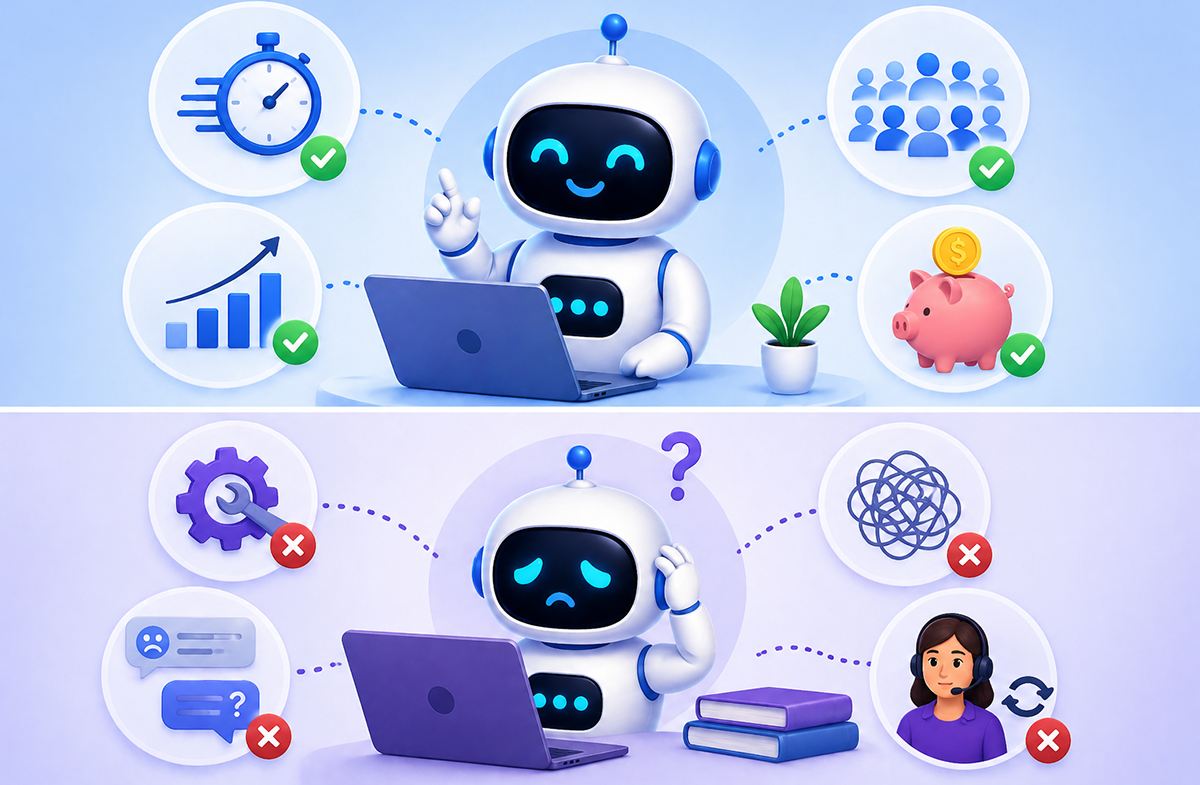
An AI chatbot is not an employee; it is infrastructure. It resolves the human bottleneck by decoupling your growth from your payroll.
The Strategic Advantages
- Instantaneous Resolution: The average response time for an AI agent is under 2 seconds. For the 80% of queries that are routine, such as "Where is my order?" or "How do I reset my password?", AI provides the instant gratification that modern consumers demand.
- Infinite Scalability: An AI agent doesn't care if you have 10 visitors or 10,000. It handles massive traffic spikes without a second of delay and without costing you a penny in overtime.
- Cost Efficiency: Once deployed, an AI agent costs a fraction of a human salary. It doesn't require benefits, office space, or training seminars, drastically lowering your Cost Per Ticket.
The Operational Limitations
- Setup Required: Unlike a human who can "figure it out," an AI needs to be trained on your specific data. If you use a generic bot without proper setup, it may give vague answers.
- The Nuance Gap: While 2026 AI is advanced, it can still struggle with highly sarcastic or extremely vague customer inputs. Without a protocol to hand off to a human, a confused bot can lead to a frustrated customer.
Key Features of a Modern Hybrid System
To successfully merge these two worlds, your system needs more than just a basic script. Here are the critical features that allow AI and Humans to work together seamlessly.
- Intelligent Routing: The system automatically identifies the nature of the query. Technical bugs are routed to engineering support, sales inquiries go to account executives, and general FAQs are handled instantly by the bot.
- Sentiment Analysis: The AI constantly scans the customer's language for signs of anger or frustration. If negative sentiment is detected, the bot automatically triggers a silent alarm and escalates the chat to a senior human agent immediately.
- Unified Agent Workspace: When a human takes over, they shouldn't have to ask "How can I help you?" again. A unified workspace shows the human agent the entire conversation history the customer had with the bot, ensuring a smooth continuation.
The Verdict: The Hybrid Model Wins
So, who wins? The answer is neither. The winning strategy for 2026 is AI First, Human Supported.
You should not be paying a human salary to answer "What are your opening hours?" for the 500th time. That is a waste of human talent.
The Ideal Workflow: First, the AI Chatbot engages every visitor instantly with zero wait time. It solves the 80% of routine queries, processes transactions, and qualifies leads automatically.
Then, if a complex issue arises, such as a distraught client or a high-value custom enterprise deal, the AI seamlessly escalates the chat to a live human agent, complete with a summary of the conversation so far.
This model gives you the speed and cost efficiency of AI, with the empathy and closing power of humans, exactly when you need it.
Why Generic Solutions Fail the Hybrid Test
Implementing this strategy requires precision. You cannot achieve a smooth AI-to-human handoff with a cheap, generic plugin.
Generic bots are silos. They don't know who your support agents are, they can't check your CRM to see if the visitor is a VIP, and they often drop the conversation awkwardly. To make the Hybrid Model work, you need a Custom AI Solution that integrates deeply with your existing helpdesk software.
Frequently Asked Questions (FAQ)
1. Do customers hate chatbots?
They hate dumb chatbots. Customers hate repeating themselves or getting stuck in loops. However, data shows that 62% of customers actually prefer an AI chatbot if it solves their problem faster than waiting for a human. The key is Resolution Time, not Human Interaction.
2. Is AI cheaper than Live Chat?
Significantly. A Live Chat strategy requires recurring monthly salaries, benefits, and training costs. A custom AI chatbot requires an upfront development fee and minor maintenance, often costing 80% to 90% less over a year while covering 24/7 hours.
3. Can AI really handle complex sales?
Yes. In 2026, AI agents can be trained on your best sales scripts. They can handle objection handling, compare products, and even schedule demos directly into your sales team's calendar.
4. How do I know when to switch to AI?
If your support team is overwhelmed, your response times are over 2 minutes, or you are missing leads outside of business hours, you are already overdue for an AI implementation.
Final Verdict: Stop Hiring More Agents, Start Building Intelligence
The debate is settled. You don't need to choose between efficiency and empathy. You just need the right architecture.
Attempting to scale your business solely with Live Chat is a fast track to burnout and bloated overheads. The future belongs to businesses that automate the routine and humanize the exceptional.
You don't need a massive agency to build this hybrid infrastructure. You need a specialized developer who understands both the code and the customer journey. Platforms like Legiit host the top 1% of freelance AI talent who can build this custom ecosystem for you.
Don't let your competitors beat you to the future.








 Download